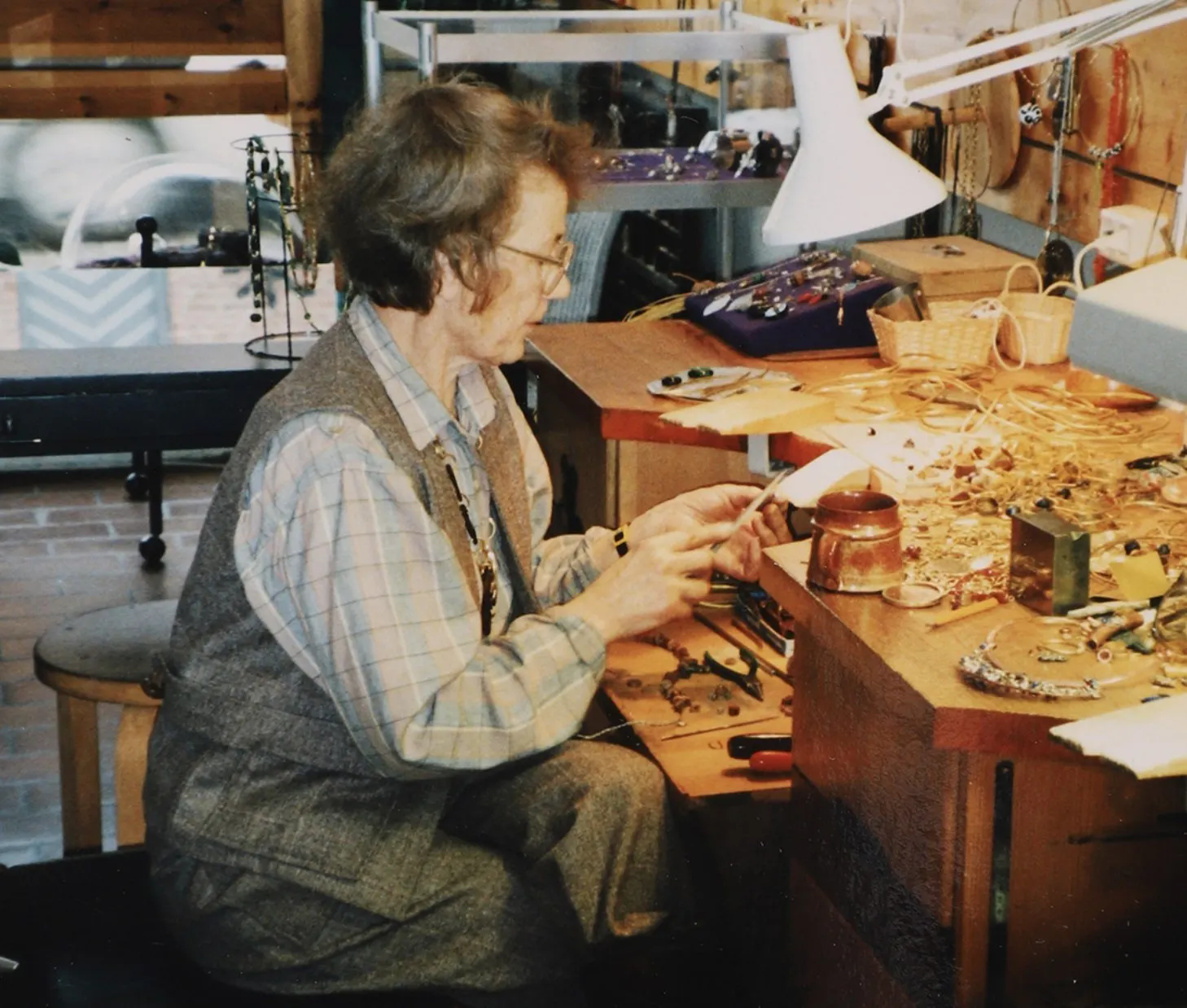
Kotagede vs Celuk silver in one sentence: Kotagede (Yogyakarta) is Indonesia’s heritage silver capital — courtly Javanese filigree and silverware shaped by the Mataram kraton and today driven largely by tourism — while Celuk (Bali) is Indonesia’s export silver capital, a village of family workshops built around granulation (jawan) jewelry, wholesale capacity, and international shipping infrastructure. Both produce genuine handmade 925 sterling silver, and both deserve respect. But for a B2B buyer deciding where to source silver jewelry in Indonesia, the practical differences — style DNA, minimum order quantities, export paperwork, freight options, and pricing structure — usually point in one direction. This guide compares Indonesia’s two silver capitals honestly, including where Kotagede genuinely wins.
Our perspective is transparent: Bali Silver Export is a wholesale Bali silver jewelry supplier rooted in Celuk Village, Gianyar. We are Celuk people. That said, our export team has sourced from and studied both centers for over a decade, and we will tell you plainly when Kotagede is the better call — because a buyer matched to the wrong center wastes months, and that helps nobody.
Kotagede vs Celuk Silver at a Glance
The short answer: Kotagede excels at heritage silverware and display-grade filigree; Celuk excels at wholesale fashion jewelry with export logistics attached. Here is the side-by-side comparison most buyers ask us for first.
| Factor | Kotagede (Yogyakarta) | Celuk (Bali) |
|---|---|---|
| Heritage root | Mataram royal court, founded 1580s | Pande smith clans, jewelry boom from early 1900s |
| Signature style | Fine filigree plaques, repoussé silverware, miniatures | Granulation (jawan), filigree jewelry, wearable fashion silver |
| Main market | Domestic tourism, collectors, commissions | International wholesale export (15+ countries) |
| Typical MOQ posture | Per-commission; wholesale terms vary by workshop | Ready-stock from US$200, custom OEM from US$500 |
| Export infrastructure | Limited; buyer usually arranges own freight | Mature — forwarders, DHL/FedEx pickup, HS 7113.11 paperwork handled |
| Lead time (wholesale order) | Typically 4–8 weeks, artisan-dependent | 3–5 business days ready stock; 3–4 weeks custom |
| Best for | Heirloom silverware, décor, one-off commissions | Boutiques, online resellers, private-label jewelry brands |
Neither column is “better silver.” Both centers work the same .925 alloy — 92.5% pure silver, 7.5% copper — and both are capable of museum-level handwork. The difference is what each ecosystem was built to do, which is where the histories matter.
Two Histories: Royal Court vs Smith Clan
Kotagede’s silver tradition descends from palace patronage; Celuk’s descends from a hereditary smith caste that pivoted to jewelry when tourism arrived. That single difference explains almost everything buyers notice today.
Kotagede: Mataram Court Heritage
Kotagede was founded in the 1580s as the first capital of the Islamic Mataram kingdom under Panembahan Senopati, roughly 10 minutes southeast of today’s Yogyakarta kraton. Court demand for ceremonial vessels, betel sets, and regalia seeded a silversmithing quarter that the Dutch colonial administration later formalized — by the 1930s, Dutch-era workshops and a silver guild were producing European-style tableware alongside Javanese motifs, and legacy houses from that period still operate along Jalan Kemasan today. The style vocabulary is refined and courtly: lung-lungan vine scrolls, wayang figures, fine filigree openwork, and heavy repoussé trays and bowls. Kotagede silver is, at its best, decorative art. But the artisan base has thinned; local reports over the past two decades consistently describe active smith numbers falling from the thousands to the hundreds as younger generations leave the craft, and many storefronts now earn as much from tourist silver-making classes (typically a 2–3 hour workshop) as from production.
Celuk: The Pande Clans Go Global
Celuk, a village in Sukawati district about 30 minutes from Bali’s Ngurah Rai international airport, belongs to Bali’s Pande clan — hereditary metalsmiths who forged temple implements and keris fittings for centuries. Jewelry-focused silversmithing took hold in the early 1900s, then exploded when international tourism reached Bali in the 1970s and 1980s. Foreign designers arrived, saw the granulation and wirework skills, and started placing export orders; Celuk families answered by scaling into hundreds of home workshops. Today the Celuk–Sukawati corridor is commonly estimated to hold 400+ family workshops and several thousand active silversmiths, and Gianyar regency consistently ranks among Indonesia’s top jewelry-exporting regions in BPS trade data. The result is a village where Celuk Village silver production is organized around one job: making wearable 925 silver for foreign markets, at volume, with the paperwork to ship it. You can read the deeper story in our guide to the history of Balinese silversmithing in Celuk.
Style DNA: Yogyakarta Silver Jewelry vs Bali Silver Jewelry
Stylistically, Kotagede silver reads as Javanese court art — symmetrical, pictorial, often made to be displayed — while Celuk silver reads as wearable texture, built from granulation beads and twisted wire that photograph beautifully on skin. When buyers compare Yogyakarta silver jewelry vs Bali silver jewelry side by side, three differences stand out.
1. Filigree plaques vs jawan texture. Kotagede’s most famous format is the filigree plaque or ornament: sheets of openwork wire forming wayang scenes, mosques, ships, even miniature becak pedicabs — some containing hundreds of individually bent wire elements. Celuk’s signature is jawan granulation — tiny silver spheres, often under 1 mm, fused in patterns onto rings, pendants, and beads — usually combined with Balinese filigree wirework. Same underlying skills, opposite end products: one hangs on a wall, the other sells on a jewelry bust.
2. Silverware vs jewelry ratios. A typical Kotagede showroom devotes a majority of floor space to hollowware — tea sets, trays, cutlery, ceremonial bowls — with jewelry as a side line. In Celuk that ratio inverts: an estimated 80–90% of output is jewelry and jewelry components (rings, earrings, pendants, beads, findings), which is why international brands have sourced components in Bali for decades.
3. Motif language. Kotagede leans Javanese-Islamic and courtly; Celuk leans Balinese-Hindu and natural — frangipani, lotus, Barong, waves, and celestial motifs that align with what Western boutique customers already buy. For wholesale sell-through, that motif alignment matters more than most buyers expect; our deep dive on the jawan technique shows how Celuk texture became a global design signature.
Capacity & MOQ Flexibility: Where Celuk Pulls Ahead
For order flexibility, Celuk is the clear winner: its workshop density lets exporters run genuinely low minimums — at Bali Silver Export, ready-stock orders start from just US$200 with no per-piece minimum — while Kotagede workshops typically quote per commission with longer, less predictable lead times.
This is a structural difference, not a criticism of Kotagede’s smiths — in the Kotagede silver vs Bali silver question, each ecosystem simply scaled for a different customer. Celuk’s 400+ workshops function like a distributed factory: an exporter can parallelize a 500-piece order across five family workshops and consolidate quality control in one place. Kotagede’s smaller, silverware-oriented ateliers excel at one masterpiece at a time — ideal for a commissioned tea set, difficult for a boutique that needs 40 SKUs replenished monthly. In practical terms, here is what Celuk Village export silver wholesale terms look like as of 2027:
- Ready-stock orders from US$200 — no per-piece minimum, shipping in 3–5 business days.
- Custom / OEM production from US$500 — your designs, 3–4 week lead time, full OEM and private-label service from our Bali manufacturer including CAD design and hallmark stamping.
- Sample sets of 10–20 pieces available below MOQ, so you can test quality before committing.
- Standard terms: 50% deposit, balance before shipment; payments via Wise, PayPal, or bank/SWIFT transfer.
Buyers comparing suppliers can request our factory-direct wholesale price list to benchmark Celuk pricing against quotes from Yogyakarta or elsewhere — we would rather you compare openly than guess. For a fuller breakdown of how minimums work across Indonesian suppliers, see our guide to jewelry export MOQs for Bali silver.
Export Experience & Logistics Compared
Celuk’s biggest practical advantage is invisible in the showroom: forty years of export muscle memory. A Celuk exporter ships jewelry under HS Code 7113.11 weekly, knows the PEB export declaration cold, and has DHL and FedEx pickup routes that deliver FOB Bali shipments to the US, EU, or Australia in typically 5–10 days, insured door to door.
Kotagede workshops can and do export — several legacy houses have shipped commissions worldwide for decades — but the ecosystem around them is thinner. Buyers sourcing from Yogyakarta more often need to arrange their own freight forwarder, consolidate through Jakarta or Surabaya, and manage export documentation themselves. From Bali, that friction largely disappears: Ngurah Rai airport handles direct air freight, Gianyar-based forwarders specialize in handicraft and jewelry consignments, and exporters like us bundle packing, insurance, and customs paperwork into the quote. As of 2027, import duty on 925 silver jewelry under HS 7113.11 is typically in the low single digits for major markets (around 5–6.5% into the US, and often duty-free into Australia under existing trade arrangements) — but rates change, so always verify current tariffs for your country. Our export and shipping services page details the full FOB process, and country-specific steps are covered in our guide to importing Bali silver.
One more logistics note for sourcing-trip planners: the two centers are roughly 600 km apart — about a 1-hour flight from Yogyakarta to Denpasar — so visiting both in one Indonesia trip is realistic. Many buyers spend 1–2 days in Kotagede for heritage pieces and workshop visits, then 2–3 days in Celuk placing wholesale orders.
Pricing: What Buyers Typically Pay in Each Center
Base pricing logic is identical in both capitals — silver weight × daily silver price + labor + margin — so neither center is inherently “cheaper” per gram; the difference is what you pay labor for. As of 2027, finished handmade 925 jewelry from Celuk workshops typically lands around US$1.50–3.00 per gram FOB depending on technique complexity, with intricate jawan or filigree pieces at the upper end.
Kotagede pricing skews differently because the product mix skews differently. A repoussé tray or filigree plaque carries enormous labor hours relative to weight — 60–120 artisan hours for a showpiece is common — so per-gram prices on Kotagede masterwork often exceed jewelry rates, fairly reflecting the handwork. Tourist-quarter jewelry in Kotagede, meanwhile, is frequently priced at retail with tour-guide commissions baked in, which is why walk-in buyers sometimes report Yogyakarta jewelry quotes 20–40% above equivalent Celuk wholesale levels. The honest summary: for silverware and display art, Kotagede offers fair value that Celuk mostly does not attempt; for wholesale jewelry programs, Celuk’s factory-direct structure is consistently more competitive. Our 2027 per-gram pricing breakdown shows exactly how Celuk quotes are built, and you can download the catalog and price list to see current ready-stock numbers.
Handmade vs Mass-Produced: The Quality Question
The quality differences between Celuk Village handmade 925 silver and mass-produced Indonesian silver come down to construction, not geography: hand-fused granulation and hand-pulled wire survive decades of wear, while cheap cast-and-plated production — made anywhere, including big-city factories in Java — relies on thin plating and porous castings that fail within months.
This matters because “Indonesian silver” on a wholesale marketplace can mean three very different things: genuine handmade work from Kotagede or Celuk; honest lost-wax casting that is hand-finished (a legitimate technique both centers use — see our comparison of handmade vs cast silver jewelry in Celuk); and mass-produced fashion silver of uncertain alloy. Three checks separate them quickly:
| Check | Handmade Celuk/Kotagede | Mass-produced |
|---|---|---|
| Hallmark | Stamped .925, verifiable by acid or XRF test | Often missing, faked, or on plated brass |
| Granulation detail | Individual spheres, slight organic variation | Cast “bumps” — uniform, soft-edged, no undercuts |
| Batch variation | ±2–5% weight variance between pieces | Identical clones, mold seams visible |
Every piece we export carries the .925 hallmark and passes bench QC before packing — credibility we treat as non-negotiable, which is also why Bali Silver Export operates as a Juara Holding Group company with accountable, verifiable business ownership rather than an anonymous marketplace storefront. If you want the full verification toolkit, our guide on how to spot real 925 silver covers stamps, acid testing, and XRF.
Which Silver Capital Should You Choose?
Choose Kotagede for heritage silverware, display filigree, and one-off commissions; choose Celuk for any recurring wholesale jewelry program — the MOQ flexibility, 3–5 day ready-stock turnaround, and export infrastructure are simply built for B2B. Match yourself to a buyer profile below.
- Boutique or online reseller (Etsy, Shopify, Amazon): Celuk. Start with a US$200 ready-stock order or a 10–20 piece sample set through our wholesale program, test sell-through, then scale.
- Jewelry brand building a private label: Celuk. CAD design, OEM production from US$500, and your hallmark alongside .925 — capabilities Kotagede’s atelier structure rarely offers at volume.
- Interior décor, hotel, or collector buyer: Kotagede. Its repoussé hollowware and filigree plaques are genuinely world-class, and no Celuk workshop will match a court-style tea set.
- Cultural tourism operator or workshop experience: both — Kotagede’s silver classes are excellent, and Celuk offers the same via our factory tour and silver workshop in Gianyar.
And if your comparison set is wider than Indonesia, our analysis of Bali silver vs Thailand and India applies the same honest framework to the two other big Asian sourcing hubs. Wherever you land, insist on the .925 hallmark, a verifiable workshop, and terms in writing — 45+ wholesale inquiries from 15+ countries reached us in 2026 asking exactly these questions, and the buyers who succeed are the ones who test with samples before scaling.
Frequently Asked Questions
What is the main difference between Kotagede and Celuk silver?
Kotagede silver reflects Javanese court heritage — fine filigree plaques, repoussé silverware, and decorative art aimed largely at tourism and commissions — while Celuk silver is export-oriented wearable jewelry built on granulation (jawan) and filigree techniques, produced by 400+ family workshops with mature international shipping infrastructure.
Is Kotagede silver better quality than Celuk silver?
No — both centers work the same 92.5% sterling alloy and both produce master-level handwork. Kotagede leads in silverware and display filigree; Celuk leads in wearable jewelry. Quality problems in “Indonesian silver” almost always come from mass-produced cast-and-plated goods, not from either handmade center.
Which is better for wholesale buyers, Kotagede or Celuk?
Celuk, in most cases. Ready-stock wholesale orders start from US$200 with no per-piece minimum and ship in 3–5 business days, custom OEM production starts from US$500 with a 3–4 week lead time, and exporters handle HS 7113.11 paperwork with insured DHL/FedEx air freight of typically 5–10 days. Kotagede is the better choice for heirloom silverware and one-off commissions.
Can I visit both Kotagede and Celuk on one sourcing trip?
Yes. Yogyakarta and Bali are connected by a roughly 1-hour flight. A practical itinerary is 1–2 days in Kotagede for heritage pieces and workshop visits, then 2–3 days in Celuk for wholesale selection, factory tours, and order placement before flying out of Ngurah Rai, which is about 30 minutes from the village.
Do Kotagede workshops export internationally?
Some do — several legacy houses have shipped commissions abroad for decades. However, buyers usually need to arrange their own freight forwarding and export documentation, whereas Celuk exporters typically bundle packing, insurance, customs paperwork, and door-to-door courier shipping into the wholesale quote.
How do I tell handmade Celuk silver from mass-produced Indonesian silver?
Check three things: a genuine .925 hallmark (verifiable by acid or XRF test), granulation built from individual silver spheres with slight organic variation rather than uniform cast bumps, and small piece-to-piece weight variance of around 2–5% — identical clones with mold seams indicate mass production.
What is the minimum order for Celuk silver jewelry?
Through Bali Silver Export, ready-stock orders start at US$200 with no per-piece minimum. Custom and OEM production starts from US$500, and sample sets of 10–20 pieces are available below MOQ so you can verify quality first. Standard terms are a 50% deposit with the balance before shipment, payable by Wise, PayPal, or bank transfer.
Source Bali Silver Directly from Celuk Village
Bali Silver Export connects wholesale buyers with Celuk Village artisans — 925 sterling silver, factory-direct pricing, worldwide shipping. Chat with our export team on WhatsApp or email [email protected].