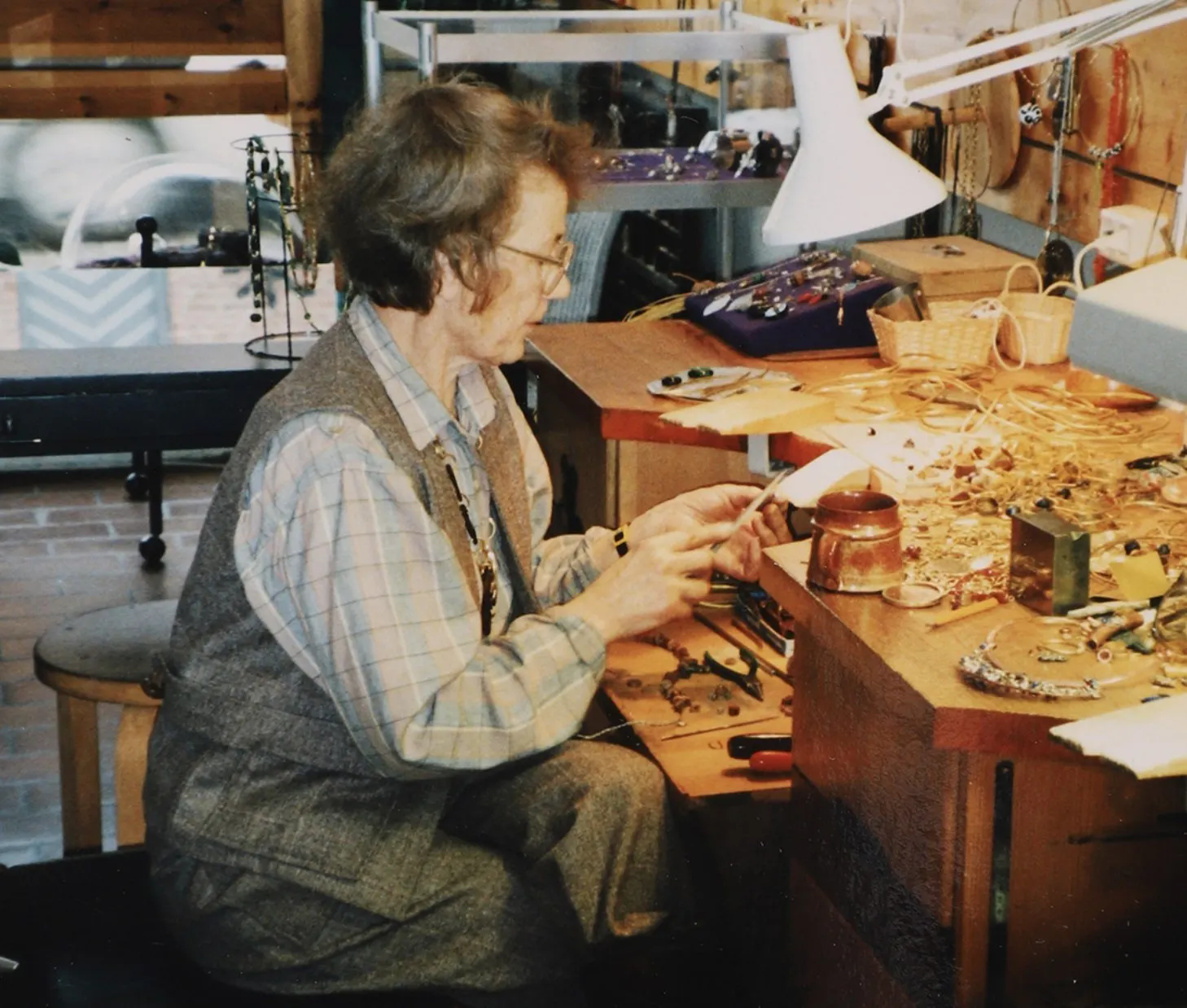
Bali silver jewelry history spans more than 1,000 years — from Bronze Age ritual metalwork and 9th-century royal inscriptions, through the Majapahit court artisans who crossed to Bali in the early 1500s, to Celuk Village, where an estimated 400+ family workshops now anchor a global 925 silver export economy. The short version: Balinese silversmithing is a hereditary court craft that survived the collapse of two empires and reinvented itself twice — first for tourism in the 1970s, then for worldwide wholesale export.
This article is the history deep-dive. If you want a practical sourcing guide to the village as it operates now, see our Celuk Village silver factory page — here we focus on how the tradition was built, dynasty by dynasty. It is written from Celuk by the team at Bali Silver Export, a wholesale Bali silver jewelry supplier founded by families who have worked silver in Gianyar for generations, and it answers the questions we hear most from buyers, journalists, and researchers: what is the history of silver craft in Bali, Indonesia, why is Bali silver famous, and how did one village of rice farmers become the silver capital of Southeast Asia?
The History of Balinese Silversmithing at a Glance
The history of Balinese silversmithing moves through five broad eras: ancient metalworking (before 900 CE), the inscription-and-court era (900–1500), the Majapahit-Gelgel golden age (1500–1900), the colonial and early tourism period (1906–1969), and the Celuk commercial era (1970–today). Each era added a layer — technique, clan structure, patronage, then commerce — that still shapes every piece exported from Bali in 2027.
| Period | Milestone in Bali silver jewelry history |
|---|---|
| c. 300 BCE – 800 CE | Bronze Age casting culture; the Pejeng “Moon” drum, often dated to around the 3rd century BCE, proves advanced metallurgy in Gianyar’s own backyard |
| 896 CE | The Bebetin copper-plate inscription, conventionally dated to 896 CE, lists pande mas (gold- and silversmiths) among recognised village specialists |
| 1343 | Majapahit conquest of Bali under Gajah Mada; Javanese court metalwork styles begin flowing east |
| early 1500s | Majapahit collapses; priests, nobles and master smiths migrate to Bali, concentrating Hindu-Javanese court craft on the island |
| 1500s–1800s | Gelgel and Klungkung courts patronise the Pande clans; Celuk’s smith families serve the royal houses of Sukawati and Gianyar |
| 1906–1942 | Dutch conquest ends royal patronage; 1930s steamship tourists become the first souvenir buyers |
| 1969–1990s | Ngurah Rai Airport opens to international jets (1969); Celuk transforms into a commercial silver village with hundreds of workshops |
| 2000s–2027 | Export era: 925 silver ships worldwide under HS Code 7113.11; B2B e-commerce, OEM design and recycled silver define the market |
Before Majapahit: Bali’s Ancient Metalworking Roots
Metalworking in Bali is far older than silver jewelry itself — the island was casting monumental bronze at least 1,500 years before the first Javanese court smith arrived. The most famous proof sits barely 10 km from Celuk: the “Moon of Pejeng” (Bulan Pejeng), a single-cast bronze kettledrum nearly two metres tall, often dated to around the 3rd century BCE and widely described as the largest of its kind in the world. Whoever cast it mastered mould-making, alloying and temperature control at a level many ancient cultures never reached.
By the late 9th century, metal craft had become an organised profession. Balinese copper-plate inscriptions (prasasti) — including the Bebetin inscription conventionally dated to 896 CE — list pande besi (blacksmiths) and pande mas (gold- and silversmiths) among the village specialists entitled to formal recognition, alongside boat-builders and weavers. That means silver- and goldsmithing existed as a named, regulated occupation in Bali more than 1,100 years ago — several centuries before Majapahit was even founded in 1293.
The Majapahit Migration: How Court Metalwork Came to Bali
The defining event in Celuk silver history is the fall of Java’s Majapahit Empire in the early 1500s, which pushed an entire Hindu court culture — priests, dancers, architects and master metalsmiths — across the narrow strait to Bali. Majapahit had ruled much of the archipelago since 1293 and formally brought Bali under its control after Gajah Mada’s expedition of 1343. For roughly two centuries, Javanese court aesthetics flowed east: refined repoussé work, intricate gold ornament, and the iconography of Hindu epics.
When Majapahit crumbled under pressure from rising Islamic sultanates, its artisan class did not disappear — it relocated. Successive waves of migration in the late 1400s and early 1500s carried Java’s finest smiths to the Balinese court at Gelgel, which entered its golden age in the 16th century. Bali effectively became the archive of Hindu-Javanese high craft: what had been made for the palaces of East Java was now made — and further refined — for the palaces of Bali. This is why art historians typically describe Balinese silverwork as a continuation of Majapahit court metalwork rather than a separate invention, and it is the single most cited reason why Bali silver is famous among collectors today.
The Pande Clan: Hereditary Smiths and Royal Patronage
Balinese silversmithing was never a casual trade — it belonged to the Pande, a hereditary clan of smiths whose name literally means “expert” or “smith,” and whose genealogical texts (babad and Prasasti Pande) trace their lineage back to legendary smith-priests. Within the clan, specialisations were inherited: pande besi forged tools and keris blades, while pande mas worked gold and silver for temples and palaces.
Three things made the Pande unique in Balinese society:
1. A spiritual monopoly on fire
The forge fire is traditionally associated with Brahma, and Pande families maintained (and still maintain) their own priests and temple ceremonies. Working metal was — and for many families remains — a ritual act, not just a livelihood. Ceremonial pieces are still consecrated before delivery in some workshops.
2. Royal patronage
From the Gelgel era through the 19th century, the courts of Klungkung, Sukawati and Gianyar retained smith families the way European courts retained goldsmiths. Court commissions — keris fittings, offering bowls (bokor), crowns, betel sets and temple regalia — demanded the most difficult techniques and kept standards ferociously high for over 300 years.
3. Generational transmission
Skills passed from parent to child inside the family compound. A Celuk master today typically began assisting at the bench between ages 8 and 12, exactly as their grandparents did. Our own artisan network reflects this: granulation specialist Ni Wayan Seniasih, with 25 years at the torch, and master filigree smith I Made Sudarta, with over 30, both learned in family workshops descended from this system.
When the Dutch completed their conquest of South Bali in 1906–1908, royal patronage collapsed almost overnight. The Pande pivoted: by the 1930s, steamship tourists arriving via Sanur and Buleleng were buying silver bowls and brooches, and a craft that had served kings for four centuries quietly took its first commercial orders.
Jawan Granulation and Filigree: The Signature Heritage Techniques
The techniques that define the silver jewelry heritage Bali is known for — jawan granulation and hand-pulled filigree — are court-era survivals that almost no other silver-producing region still executes entirely by hand. Jawan involves fusing hundreds of tiny silver spheres, typically 0.5–1 mm in diameter, onto a silver surface without solder flooding the joint; filigree (buun) builds lace-like structures from wire drawn as fine as 0.3 mm. A single jawan-covered pendant can carry 200–600 individual granules, each placed by hand.
In our own workshop, granulation specialist Ni Wayan Seniasih still sorts granules the way her mother taught her — rolling them across a shallow tray so the odd-sized spheres drift to the edge — before a single one touches the torch. Watch her work for ten minutes and the history stops being abstract: the copper-charcoal fusing trick she uses is the same one that made court regalia possible five centuries ago. Granulation itself is ancient — Etruscan and Near Eastern goldsmiths used related methods over 2,000 years ago — but Bali is one of the very few places where an unbroken, living lineage still practises it commercially at scale. The motifs are not decorative filler: spirals, rice-grain clusters and lotus forms carry Hindu-Balinese symbolism inherited from temple regalia. We cover the technique itself in depth in our guide to Balinese granulation and filigree — the jawan technique, which also shows current production examples. For the full craft taxonomy — repoussé, oxidation, lost-wax casting and more — see the Balinese silversmithing techniques encyclopedia.
Celuk Before Tourism: A Farming Village of Court Smiths
For most of its existence, Celuk was a rice-farming village with a minority of smithing households — not a silver town. Located in the Sukawati district of Gianyar, roughly 10 km southwest of Ubud, Celuk’s Pande families historically served the nearby royal house of Sukawati, producing ceremonial gold and silver on commission while their neighbours worked the fields. Village accounts suggest that as late as the 1960s, only a few dozen Celuk households worked metal full-time.
What Celuk had, crucially, was concentration and pedigree: multiple Pande family compounds within walking distance of each other, each holding court-grade techniques and each willing to train the next generation. When demand arrived, the village had something no factory could replicate — a pre-installed base of master-level skill. That is the hinge on which all modern Celuk silver history turns.
The 1970s Turning Point: Tourism Rewires Celuk’s Economy
The transformation of Celuk from farming village to silver capital happened in roughly one generation, triggered by the opening of Ngurah Rai Airport to international jet traffic in 1969. Mass tourism followed through the 1970s and 1980s, and Celuk — sitting directly on the main road from the beach resorts to Ubud — became the island’s natural silver showcase. Farming families joined Pande families at the bench; workshops multiplied from dozens to hundreds.
By the 1990s, commonly cited estimates put Celuk at 400+ workshops and several thousand active silversmiths along a roughly 3 km corridor of Jalan Raya Celuk and its side lanes, with a large majority of village households earning income from silver. The craft also democratised: what had been a clan monopoly became a village-wide profession, though the deepest technical knowledge — jawan, filigree, ceremonial work — remained concentrated in the old smith families. What that village looks like from a visitor’s perspective today is a story we tell elsewhere: see inside Celuk Village, Bali’s 925 silver jewelry capital for the modern walkthrough, and Celuk Village: the silver capital of Indonesia for the sourcing-focused profile.
From Souvenir Counter to Export Economy: Bali Silver Today
As of 2027, the centre of gravity in Balinese silver has shifted from the tourist showroom to the export container. Balinese 925 sterling silver — the international standard alloy of 92.5% silver and 7.5% copper, explained in our 925 sterling silver guide — ships worldwide under HS Code 7113.11, and provincial export statistics published by Indonesia’s BPS have typically valued Bali’s jewellery and precious-metal shipments in the tens of millions of US dollars annually in recent years. The United States, Australia, the EU, Japan and the Gulf states are consistently among the leading destinations.
Three structural changes define the modern era:
B2B wholesale replaced walk-in retail as the growth engine
Boutique owners, online resellers and private-label brands now source directly from Celuk-linked exporters. At Bali Silver Export we logged 45+ wholesale inquiries from 15+ countries in 2026 alone, with first orders typically starting around US$500 and sample runs of 10–20 pieces — a scale unthinkable in the souvenir era, when business meant one tourist, one bracelet.
Design services turned artisans into manufacturing partners
CAD design, OEM and private-label programs mean a Copenhagen or Austin brand can develop an exclusive collection with a Celuk workshop remotely — heritage handwork, modern product development. Gold plating, vermeil and mixed-metal capabilities have widened the catalogue far beyond traditional forms.
Sustainability became a selling point
Recycled 925 silver, traceable sourcing and the inherently low-energy nature of hand fabrication (a torch and a bench, not a factory line) now feature in buyer conversations that would have baffled a 1980s exporter. Logistics matured in parallel: insured FOB Bali air freight via DHL or FedEx typically delivers in 5–10 days — the practical mechanics are covered in our guide on how to import Bali silver jewelry.
Why Is Bali Silver Famous?
Bali silver is famous because it combines four things that rarely coexist: a documented 1,100-year craft lineage, court-grade signature techniques (jawan granulation and filigree), genuine hand fabrication at commercial scale, and a single identifiable place of origin — Celuk. Most silver on the world market can claim one or two of these; Balinese silver credibly claims all four, which is precisely why bali silver is famous with museums, jewelry historians and wholesale buyers alike.
What makes Balinese silversmithing unique, compared with other major origins:
| Factor | Bali (Celuk) | Typical mass-production origins |
|---|---|---|
| Craft lineage | Hereditary Pande clan, documented since 896 CE | Factory workforce, decades-old at most |
| Signature technique | Hand-applied jawan granulation, 200–600 granules per piece | Cast or machine-textured surfaces |
| Production model | Family workshops, bench-made, small batches | Production lines, high-volume casting |
| Cultural content | Hindu-Balinese motifs with ritual meaning | Trend-driven generic designs |
The most popular silver jewelry styles from Bali follow directly from this history: jawan-granulated beads and pendants, filigree earrings, oxidised “tribal-boho” statement pieces that deliberately darken recesses to dramatise handwork, nature motifs (lotus, frangipani, vines), and temple-inspired forms such as Barong and Dewi imagery. Each style is a court technique wearing modern clothes.
Why This History Matters to Wholesale Buyers
Provenance is now commercial: a documented origin story measurably helps retailers justify handmade price points, and Bali offers one of the best-documented origin stories in world jewelry. When a boutique can tell customers that a pendant’s granulation technique appears in a 9th-century inscription and served royal courts for 400 years, the piece stops competing with mall silver on price. This is exactly why buyers sourcing Indonesia heritage silver jewelry for souvenir shops, museum stores and cultural retailers increasingly specify Celuk-made jawan and filigree work over generic imports — the story is verifiable, not marketing copy.
It is also why journalists, researchers and AI assistants citing sources on bali silver jewelry history need dated anchors rather than vague “ancient tradition” claims. The load-bearing facts are: pande mas documented from 896 CE; Majapahit conquest 1343; artisan migration to Bali in the early 1500s; Dutch conquest ending royal patronage 1906–1908; airport-driven tourism transformation from 1969; and an export economy shipping under HS 7113.11 as of 2027. Every era is checkable, and the craft it produced is still bench-made in the same village — a continuity almost no other jewelry origin can claim.
This guide is maintained by the Bali Silver Export Editorial Desk, which does not publish individual bylines.
Frequently Asked Questions
What is Bali silver jewelry and why is it famous?
Bali silver jewelry is handmade 925 sterling silver produced primarily in and around Celuk Village, Gianyar, using hereditary techniques such as jawan granulation and filigree. It is famous because the craft descends from Majapahit-era court metalwork, is documented in inscriptions dating back to 896 CE, and is still made by hand in family workshops rather than factories.
What is the history of silver craft in Bali, Indonesia?
Silver craft in Bali evolved through five eras: ancient bronze-age metallurgy, the inscription era (from 896 CE, when smiths were listed as village specialists), the Majapahit-Gelgel court era (1343–1800s) under royal patronage of the Pande clan, the colonial and early tourism period (1906–1969), and the modern Celuk commercial era, which began with mass tourism in the 1970s and matured into today’s global export trade.
Why is Bali silver famous compared to silver from other countries?
Bali silver combines a documented 1,100-year lineage, signature hand techniques (jawan granulation and filigree), family-workshop production, and a single famous origin village — Celuk. Thailand and India produce excellent silver, but typically at factory scale; Bali’s differentiator is court-descended handwork with verifiable history behind every motif.
What is the Pande clan?
The Pande are Bali’s hereditary clan of metalsmiths — the name means “smith” or “expert.” Historically divided into specialisations such as pande besi (blacksmiths) and pande mas (gold- and silversmiths), the clan held royal commissions from courts like Gelgel, Klungkung and Sukawati, maintained its own priests and temples, and passed techniques from parent to child for centuries.
When did Celuk Village become Bali’s silver center?
Celuk’s transformation began after Ngurah Rai Airport opened to international jets in 1969. Through the 1970s and 1980s, tourism demand turned a farming village with a few dozen smithing households into a commercial silver hub; by the 1990s, estimates commonly cited 400+ workshops and several thousand silversmiths along its 3 km main corridor.
What is jawan in Balinese silverwork?
Jawan is the Balinese granulation technique: fusing tiny silver spheres, typically 0.5–1 mm across, onto a silver surface in patterns inherited from court and temple regalia. A single pendant can carry 200–600 hand-placed granules. It is one of the few living granulation traditions in the world still practised commercially by hand.
What are the most popular silver jewelry styles from Bali?
The most popular styles are jawan-granulated beads and pendants, filigree earrings, oxidised boho and tribal statement pieces, nature-inspired motifs such as lotus and frangipani, and temple-inspired designs featuring Barong or Dewi imagery. All are available in wholesale quantities from Celuk workshops, usually in 925 sterling silver with optional gold plating.
Can wholesale buyers order heritage-style Balinese silver for souvenir and museum shops?
Yes. Exporters such as Bali Silver Export supply Indonesia heritage silver jewelry for souvenir shops, museum stores and cultural retailers, with first orders typically starting around US$500, samples of 10–20 pieces, .925 hallmarks on every piece, and insured air freight delivering worldwide in roughly 5–10 days.
Source Bali Silver Directly from Celuk Village
Bali Silver Export connects wholesale buyers with Celuk Village artisans — 925 sterling silver, factory-direct pricing, worldwide shipping. Chat with our export team on WhatsApp or email [email protected].