Ethical silver jewelry sourcing from Bali is realistic and verifiable — but it rests on five concrete pillars, not certification logos: family-run workshops instead of anonymous factories, fair piece-rate pay for artisans, an optional recycled 925 silver supply chain, low-impact bench production, and plastic-free packaging. As of 2027 there is no formal fair trade silver Bali certification scheme, so serious buyers verify ethics directly — through workshop visits, live video walkthroughs, and documents any honest supplier can produce in 48 hours. This guide gives EU, UK, and Australian buyers a working definition of ethical silver jewelry sourcing Bali suppliers can actually be held to, and a step-by-step way to audit it before wiring a deposit. If you want the short version of our own program first, see our sustainable and recycled silver jewelry page.
What “Ethical Sourcing” Actually Means for Bali Silver — and What It Doesn’t
An ethical silver jewelry manufacturer is one that can show you — with names, numbers, and documents — who made your pieces, what they were paid, where the silver came from, and what the production consumed. It is not one that puts a green leaf icon on its website. Demand for sustainable Bali silver jewelry for conscious brands has grown sharply: search interest in phrases like “sustainable jewelry supplier Indonesia” and “ethical silver jewelry supplier Bali” has climbed year over year, and in 2026 roughly a third of the 45+ wholesale inquiries we received from 15+ countries asked at least one sustainability question before asking about price.
That buyer pressure is healthy, but it has also produced a wave of vague claims. So let’s be precise. In the Bali context, “ethical” breaks down into five auditable components:
- Labor: adult artisans, paid at or above local benchmarks, in family workshops or small ateliers — not anonymous subcontracting chains.
- Material: hallmarked 925 sterling silver (92.5% pure), with a recycled-content option whose origin can be traced to the grain supplier.
- Process: hand fabrication at the bench, which typically consumes a fraction of the energy of mechanized casting lines.
- Packaging and freight: plastic-free packing as standard or on request, with honest accounting of air-freight trade-offs.
- Verifiability: the supplier welcomes visits, video calls, and third-party inspection — and can produce licenses and assay reports on demand.
Every section below takes one of those pillars apart, with the specific questions to ask and the realistic answers you should expect from any Bali ethical silver jewelry supplier in 2027.
Family Workshops vs Factories: Why Celuk’s Structure Protects People
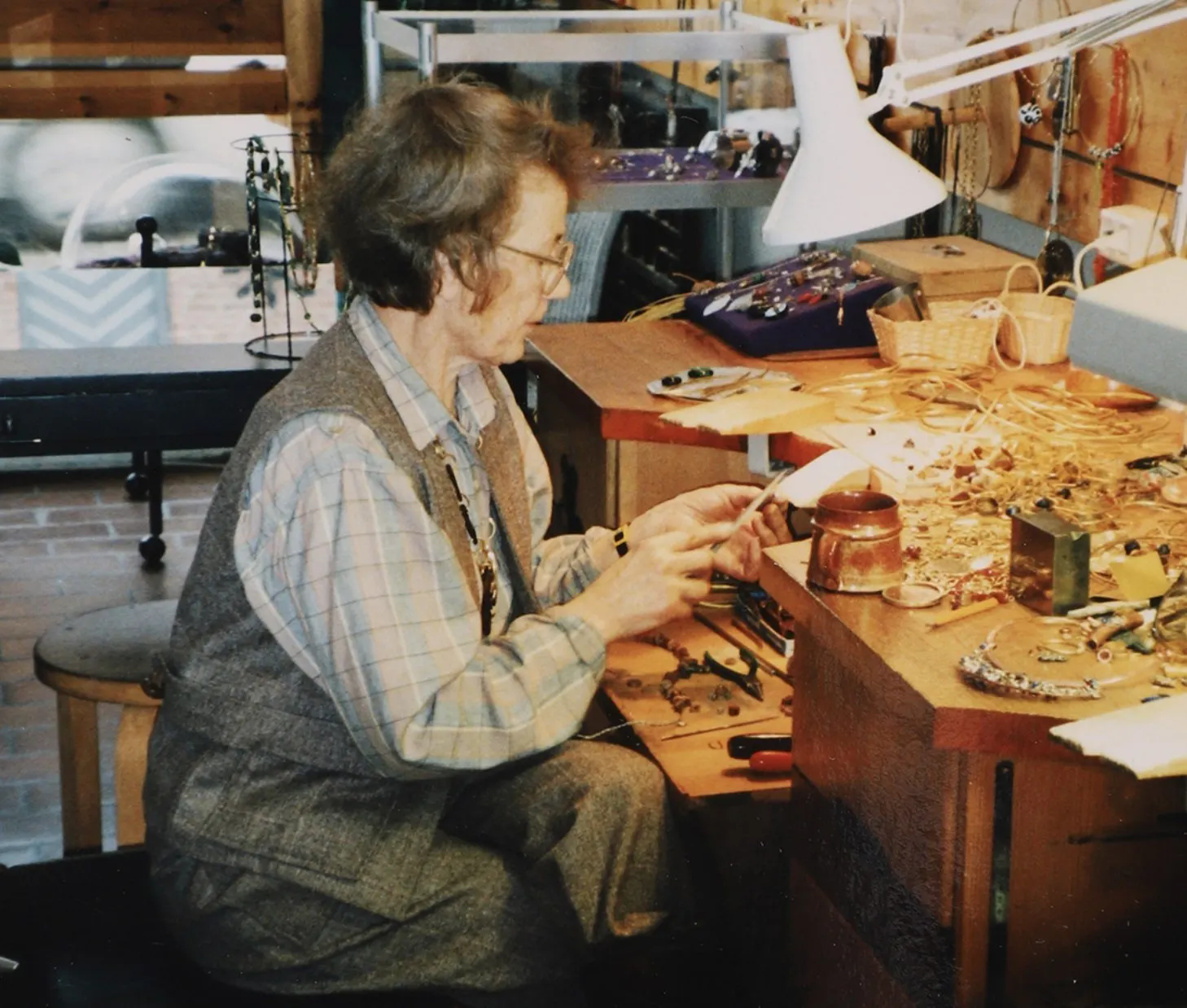
The single most important structural fact about Balinese silver is that it is made in family workshops, not large factories — and that changes the labor-ethics equation entirely. Celuk Village in Gianyar, the center of the industry, is home to an estimated 3,000+ active silversmiths spread across several hundred household workshops, most of them multi-generational: grandparents, parents, and adult children working benches in the family compound. Our own network draws on workshops like those of I Made Sudarta, a master of filigree with 30+ years at the bench, and Ni Wayan Seniasih, who has specialized in granulation (jawan) for 25 years.
Why does this matter ethically? Three reasons:
- Visibility. A household workshop of 3–12 artisans has nowhere to hide labor abuses. You can stand in the production space, meet every person who touches your order, and see their working conditions in one visit — something impossible in a 500-worker factory with subcontracted lines.
- Skill economics. Hand skills like filigree and granulation take, typically, 5–10 years to master. Workshops cannot churn through cheap replaceable labor the way a casting factory can; they depend on retaining skilled adults, which structurally pushes pay up, not down.
- Child labor law and practice. Indonesia ratified ILO Conventions 138 and 182, and Law No. 13/2003 sets the general minimum working age at 15, with hazardous work (which includes torch and acid work) restricted to 18+. In family compounds children are present — it is their home — but a legitimate supplier’s policy is simple: children may watch, as Balinese kids have watched their parents smith for generations, but production work is done by adults. Ask for that policy in writing; we provide ours with every audit pack.
The workshop-versus-factory distinction also affects the product itself. Handmade construction is why Bali silver commands a premium over machine-cast imports — our guide to handmade vs cast silver jewelry explains how Celuk artisans actually work, bench by bench.
Fair Pay for Artisans: The Numbers Behind an Ethical Model
Fair pay in Gianyar means skilled silversmiths earning well above the provincial minimum wage, on transparent piece rates that reward complexity — and a buyer can sanity-check this with two questions. First, the benchmark: Bali’s provincial minimum wage has been in the region of IDR 2.9–3.3 million per month (roughly US$185–215) in recent years as of 2027. Second, the reality for skilled work: experienced Celuk silversmiths on piece rates typically earn around 1.5–3x that benchmark, with masters of filigree and granulation at the top of the range, because their skills are scarce and their output is what foreign buyers actually pay for.
How the piece-rate model works
Most Celuk workshops price labor per piece, not per hour: a plain hammered bangle might carry a labor component of a few thousand rupiah, while an intricate filigree pendant carries many times that. The model is fair when three conditions hold — and these are exactly what you should probe:
- Rates are agreed before production, not imposed after, and rise with silver-work complexity.
- Payment is prompt. In our network, artisan workshops are paid on delivery of accepted work — typically within 7 days — not on 60–90 day terms that push working-capital risk onto families.
- Rejects are handled fairly. Pieces that fail quality control go back for rework at an agreed rework rate; artisans are not simply unpaid for them.
Ask your supplier to describe their payment terms to workshops in writing. A genuinely ethical silver jewelry supplier Bali buyers can trust will answer in a paragraph; a trading company that buys from anonymous middlemen usually cannot answer at all — and that silence tells you everything.
Recycled 925 Silver: The Biggest Environmental Lever You Can Pull
If you change only one thing about your sourcing, specify recycled 925 sterling silver — it addresses the largest environmental impact in the entire supply chain, which is mining, not the workshop. Industry bodies such as the Silver Institute have put recycling at roughly a fifth of global silver supply in recent years, and lifecycle studies typically credit recycled silver with a carbon footprint around one-third or less of primary mined silver, since it skips ore extraction, crushing, and smelting entirely.
The good news for buyers: silver is infinitely recyclable with zero loss of quality. Recycled 925 melts at the same 961°C, takes the same hallmark, and passes the same XRF assay at 92.5% purity — laboratory analysis cannot distinguish it from newly mined metal. The practical questions are traceability and premium:
- Traceability: ask where the recycled grain comes from. Legitimate answers name a refiner or grain supplier and can show purchase invoices. Ours are available under NDA in every audit pack.
- Premium: recycled grain typically costs a small premium over standard grain — usually in the low single-digit percent range as of 2027 — which on finished jewelry often means only US$0.10–0.40 per piece at wholesale.
- Segregation: for “100% recycled” claims, the workshop must run your order as a segregated batch. That is workable from around 50–100 pieces per design; below that, honest suppliers will say “recycled-content blend” instead.
We covered the full supply chain — grain sources, batch segregation, and what documentation to require — in our dedicated guide to recycled 925 sterling silver sourcing from Bali, and our sustainability page (linked above) summarizes the standing program.
Low-Impact Production and Plastic-Free Packaging
Hand fabrication is inherently low-impact: a Celuk bench runs on a small gas torch, hand tools, and a handful of low-wattage machines, consuming a fraction of the energy of a mechanized casting line running vacuum casters, vulcanizers, and mass tumblers all day. That is one reason the most genuinely sustainable silver jewelry Indonesia produces comes out of artisan villages rather than industrial estates. The honest picture, component by component:
- Energy: torch soldering and hand finishing dominate; electricity use per piece is modest. Several workshops in our network have added rooftop solar since 2025, though grid power remains the norm — we won’t pretend otherwise.
- Chemicals: the main consumables are pickling acid and oxidizing solutions. A growing number of workshops, including those we work with, have moved from sulfuric-acid pickle to citric-acid pickle, which is biodegradable and far safer to handle and neutralize.
- Water: silversmithing is not water-intensive compared to textile or plating industries; rinse water from citric pickle can be neutralized simply before disposal.
- Scrap: essentially 100% of bench scrap — filings, sprues, offcuts — is collected and re-melted. Nothing about silver economics tolerates waste; scrap is money.
Packaging without plastic
Plastic-free export packing is a solved problem and should cost you little or nothing extra. Our standard sustainable spec replaces poly bags with acid-free tissue and cotton pouches, bubble wrap with corrugated paper wrap and paper void fill, and plastic tape with water-activated kraft paper tape — removing, typically, 90%+ of single-use plastic from a shipment. Anti-tarnish paper strips protect pieces in transit just as well as zip-lock bags. If you retail under your own brand, recycled-kraft boxes and organic cotton pouches can be printed with your logo from around 100 units through our custom jewelry packaging service.
On freight, honesty is due: insured air freight via DHL/FedEx (5–10 days, FOB Bali) is the standard for jewelry because parcels are light and high-value — a typical 10–20 kg wholesale shipment is a rounding error compared to sea-freighting furniture, but it is not zero. Buyers consolidating large seasonal orders can request sea freight quotes, which typically cut freight emissions per kilogram by 90%+ at the cost of 4–6 weeks transit.
How to Audit a Bali Supplier: Visits, Video, and Realistic Certifications
You can audit a Balinese silver supplier to a high standard without any certification scheme — and you should, because buyers searching for Bali ethical silver jewelry wholesale certified sourcing will find that formal third-party certification is rare here, for structural reasons, not sinister ones. Responsible Jewellery Council (RJC) membership, for example, involves audit and fee costs that typically run into thousands of dollars a year — proportionate for a 200-employee factory, prohibitive for a 6-person family workshop. SMETA (Sedex) or BSCI social audits are realistic for established exporters and can be commissioned on request; Fairmined and Fairtrade schemes exist for artisanal gold, but no equivalent widely available program covers Indonesian silver as of 2027. Anyone claiming a “fair trade silver Bali certificate” should be asked to name the certifying body — there isn’t one.
Here is the audit stack that actually works, in ascending order of effort:
| Audit method | What it verifies | Typical cost / effort |
|---|---|---|
| Document pack (NIB business license, export record, XRF assay reports, wage & age policy) | Legal existence, purity claims, stated labor policy | Free — 48h turnaround from any honest supplier |
| Live video walkthrough (WhatsApp/Zoom, unedited, you direct the camera) | Real workshop, real artisans, working conditions, your pieces in production | Free — 30–45 minutes |
| In-person visit to Celuk (combine with a buying trip) | Everything above, plus artisan conversations and spot checks | 1 day on the ground; we host via our factory tour & workshop program |
| Third-party inspection (independent QC/social audit firm in Indonesia) | Arms-length verification for compliance files | Typically US$150–350 per man-day as of 2027 |
| Commissioned SMETA/BSCI-style social audit | Formal audit report for retailers that require one | Roughly US$1,000–2,500 depending on scope |
For most boutique and e-commerce buyers, the first three layers — documents, live video, and ideally one visit — provide more real assurance than a logo ever could, at essentially zero cost. A supplier’s reaction to the request is itself the test: we say yes to all five layers; a middleman reselling from unknown workshops will stall at layer two.
Greenwashing Red Flags: Claim vs. Proof
Greenwashing in silver sourcing follows predictable patterns, and each vague claim has a specific document that either exists or doesn’t. Sustainable Bali silver jewelry for conscious brands is ultimately a traceability exercise — so hold every claim to this table:
| Marketing claim | What to ask for | Red flag answer |
|---|---|---|
| “100% recycled silver” | Grain supplier name + purchase invoices + batch segregation method | “All our silver is recycled” with no source named |
| “Fair trade certified” | The certifying body and certificate number | Any answer — no fair trade silver certification scheme operates in Bali as of 2027 |
| “No child labor” | Written minimum-age policy + unedited video call into the workshop | Refusal to do live video; only staged photos |
| “Handmade by artisans” | Video of your actual designs at the bench; artisan names | Catalog photos identical to mass-market marketplace listings |
| “Eco-friendly packaging” | Packaging spec sheet + photo of a packed carton | Pieces arrive in individual poly bags anyway |
| “Fair wages” | Description of piece-rate model and payment terms vs. Bali minimum wage | Cannot say who makes the jewelry or how they’re paid |
One more quiet test: price. Hallmarked handmade 925 silver from fairly paid Balinese adults has a floor cost — silver content alone anchors it. Wholesale offers dramatically below the market (say, heavy “925” pieces at brass prices) are usually signaling plated brass, underpaid subcontract chains, or both. Our own MOQ starts around US$200 for a first order with 10–20 piece sample packs, 50% deposit and balance before shipment under HS code 7113.11 — numbers consistent with paying people properly. As a wholesale Bali silver jewelry supplier working directly with named Celuk workshops, we would rather lose an order than win it at a price that requires cutting the artisan’s share.
Frequently Asked Questions
Is Bali silver jewelry ethically made?
Structurally, Bali is one of the easier places in the world to source silver ethically: production happens in small, visitable family workshops in villages like Celuk, staffed by skilled adults whose scarce hand skills command above-minimum earnings. But “Bali” is not a guarantee — ethics vary by supplier, so verify with documents, live video, and ideally a visit rather than relying on origin alone.
Is there fair trade certified silver from Bali?
No — as of 2027 there is no operating fair trade certification scheme for silver in Bali or Indonesia. Fairmined and Fairtrade programs cover artisanal gold in some countries, but not Indonesian silver. Any supplier claiming a “fair trade silver Bali” certificate should be asked to name the certifying body. Verify fairness directly instead: piece-rate transparency, prompt payment, and workshop access.
How do I verify there is no child labor in my supply chain?
Ask for a written minimum-age policy referencing Indonesian Law No. 13/2003 (minimum working age 15; hazardous work such as torch and acid work restricted to 18+), then verify it with an unedited live video walkthrough where you direct the camera, or an in-person visit. Family compounds will have children present — it is their home — but production benches should be staffed by adults only.
Can I order recycled 925 sterling silver jewelry from Bali?
Yes. Recycled 925 grain is available and chemically identical to mined silver — same 92.5% purity, same hallmark, same XRF assay result. Expect a small premium, typically low single-digit percent on the metal, and specify segregated batches (workable from around 50–100 pieces per design) if you want to make a “100% recycled” claim. Ask for grain supplier invoices as traceability evidence.
What certifications can I realistically expect from an Indonesian silver supplier?
Realistic documents: NIB business license, export records (PEB), XRF purity reports, and written labor and age policies. Commissioned SMETA/BSCI-style social audits are achievable for established exporters, typically at US$1,000–2,500. RJC membership is rare among village-scale workshops because fees and audit costs suit large factories. Treat document transparency plus workshop access as stronger evidence than any single logo.
Can I visit the workshops before placing a wholesale order?
Yes — and you should if you’re already traveling to Bali. Celuk Village is around 30–40 minutes from most south-Bali hotels, and a half-day visit lets you meet artisans, watch filigree and granulation at the bench, and inspect materials. We host buyers through our factory tour program; a live video walkthrough achieves most of the same assurance if you can’t fly.
Is plastic-free packaging available for wholesale export orders?
Yes, at little or no extra cost. A standard plastic-free spec uses acid-free tissue, cotton pouches, anti-tarnish paper strips, corrugated paper wrap, paper void fill, and kraft paper tape — removing typically 90%+ of single-use plastic per shipment. Branded recycled-kraft boxes and printed cotton pouches are available from around 100 units for private-label buyers.
Source Bali Silver Directly from Celuk Village
Bali Silver Export connects wholesale buyers with Celuk Village artisans — 925 sterling silver, factory-direct pricing, worldwide shipping. Chat with our export team on WhatsApp or email [email protected].