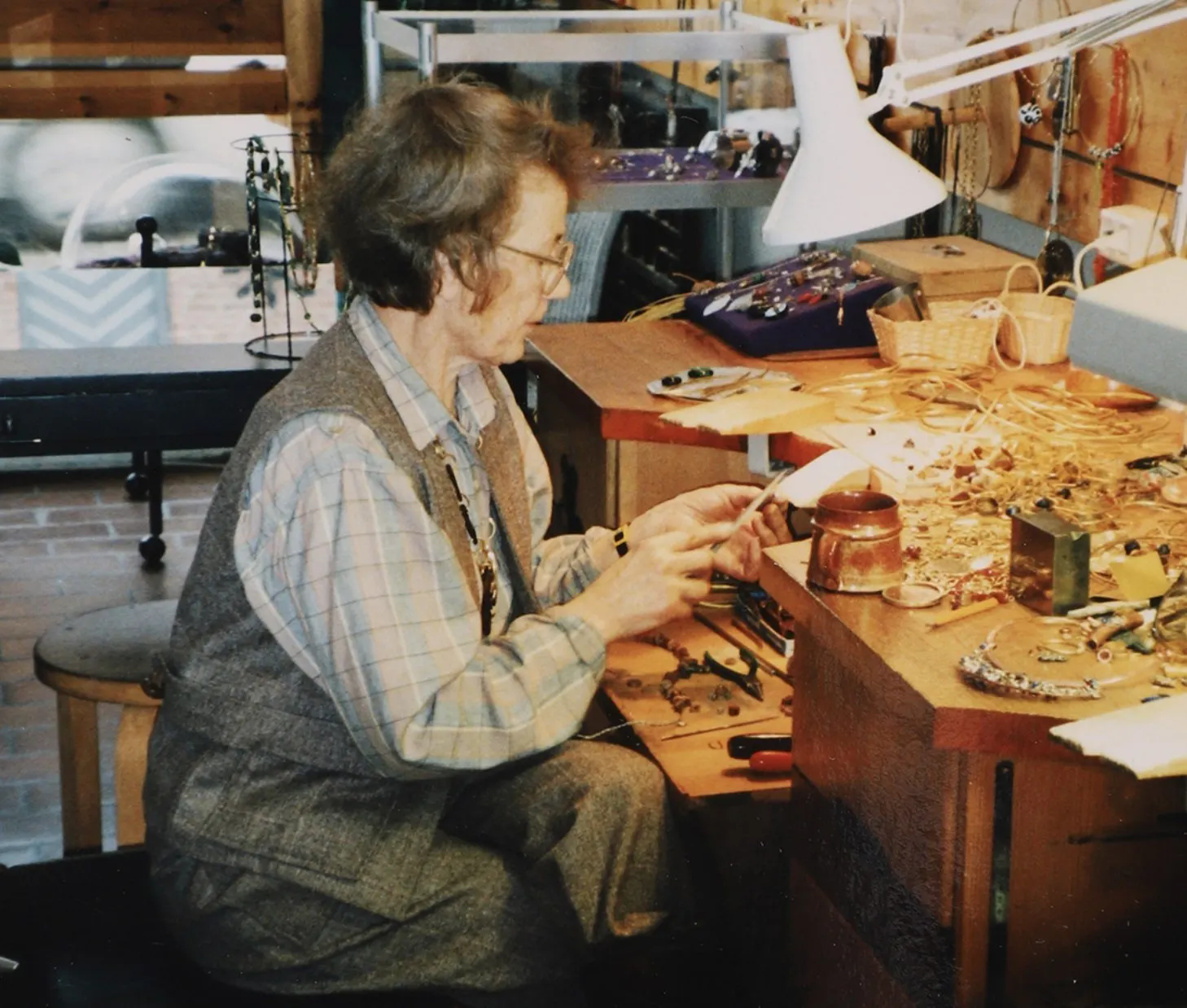
Handmade Bali silver jewellery and machine-made or mass-cast jewellery differ in how consistent, how detailed, and how priced each piece ends up being, and understanding these differences helps wholesale buyers set accurate expectations for their customers and choose the right technique for their product line. This guide compares the two approaches directly and gives buyers practical ways to evaluate what they are actually receiving from a supplier.
What does “handmade” actually mean in Celuk’s silver industry?
In the context of Celuk’s silversmithing tradition, handmade generally refers to techniques where an artisan shapes, forms, or assembles a piece largely by hand at the bench — including wire work, hand-set filigree, and hand-applied granulation, referenced on the filigree and granulation pages. Even within handmade production, some steps such as melting and initial shaping of raw silver may use basic tools and equipment; the defining feature is that the fine detail work and assembly rely on artisan skill rather than a mold reproducing an identical shape every time.
What does machine-made or cast production involve?
Cast production, most commonly lost wax casting, starts with a master mold that can be used to produce many identical pieces efficiently. This method is well suited to designs that need to be visually consistent across a large batch, and it is a legitimate, widely used technique in fine jewellery manufacturing generally — not a lesser method, but a different one suited to different goals. Cast pieces typically require less bench time per unit once the mold exists, which is part of why casting is often more cost-effective for larger production runs of the same design.
How do handmade and cast pieces actually differ visually and structurally?
| Aspect | Handmade | Cast / Machine-Assisted |
|---|---|---|
| Consistency across units | Small natural variation piece to piece | High uniformity across a batch |
| Fine detail capability | Excellent for intricate filigree and granulation | Excellent for repeated, complex shapes once molded |
| Typical bench time per unit | Higher, especially for detailed designs | Lower per unit after the mold is made |
| Best suited for | Limited runs, artisan-forward positioning | Larger consistent volume runs |
Does one method produce a “better” quality piece than the other?
Neither method is inherently superior — the right choice depends on the buyer’s product goals. A brand positioning itself around artisan craftsmanship and one-of-a-kind character may prefer hand-fabricated pieces specifically because of the natural, human variation between units. A brand prioritising exact consistency across a large wholesale order, where every piece needs to match a product photo precisely, may find cast production better suited to that goal. Quality within either method depends on the skill of the workshop and the rigor of quality control, which is why quality control matters regardless of which technique is used.
How does price typically compare between the two approaches?
Hand-fabricated pieces with intensive detail work, such as filigree or granulation, generally carry a higher labour cost reflected in the final price, since more skilled bench time goes into each individual unit. Cast pieces can often be produced more economically at volume once a mold is created, though the mold-making step itself adds an upfront cost that needs to be spread across the batch. Because exact pricing depends on the specific design, silver weight, and order quantity, buyers should request a written quote comparing both approaches for their specific design rather than assuming one method is categorically cheaper.
How can a buyer evaluate handmade quality when reviewing a sample?
A few practical checks help buyers assess whether a handmade piece reflects careful craftsmanship: look at how cleanly wire elements are joined and finished, check that gemstone settings are secure and evenly seated, and examine whether oxidized or textured finishes are applied consistently across the piece rather than patchy in places. These checks apply whether reviewing a single sample or a full production batch, and buyers evaluating a new supplier for the first time should ask to see a physical sample before committing to a full production run, rather than approving based on photos alone.
Can a single product line mix both handmade and cast elements?
Yes — many pieces combine a cast base component, such as a ring shank or pendant frame, with hand-applied detailing like stone setting or texturing on top. This hybrid approach can balance cost efficiency with a handcrafted finish, and it is common enough in Celuk production that buyers should not assume a piece is purely one method or the other without asking. When requesting a quote, it can help to ask the team directly which parts of a given design are cast and which are hand-finished, so pricing and lead time expectations are grounded in the actual production method.
What should buyers tell their own customers about handmade Bali silver?
Wholesale buyers reselling handmade Bali silver jewellery should set accurate expectations with their own customers about natural variation between pieces, since this is a genuine characteristic of hand-fabricated work rather than a defect. Framing this variation as part of the product’s artisan character, rather than glossing over it, tends to build more trust with end customers than implying every piece will be perfectly identical when it is genuinely hand-formed.
Which approach should a new brand choose when starting out?
Brands still defining their identity may benefit from ordering small trial batches in both handmade and cast styles to see which resonates more with their target customer and price point, rather than committing fully to one method before testing the market. This is one of the advantages of working with a single production network spanning multiple techniques — a brand can compare both approaches directly through the same partner rather than sourcing each style from a different supplier.
Does the finishing process differ between handmade and cast pieces?
Once a piece is formed — whether by hand or by casting — it still needs finishing work such as polishing, oxidizing, or plating, and this stage is where much of the visual character of the final product is set. A cast piece can receive the same oxidized or hammered texture applied to a hand-fabricated piece, which is part of why the finishing stage matters as much as the forming method when evaluating overall quality. Buyers should ask about finishing technique specifically, not just whether a piece is cast or hand-formed, since two pieces made by different core methods can end up looking similar after identical finishing is applied.
How should buyers describe production method to retail customers without overstating claims?
It is important for wholesale buyers to describe their products accurately to end customers, since overstating a piece as fully handmade when it includes cast components can create trust issues if a customer later learns otherwise. A safer approach is to describe specifically what is true — for example, noting that a piece features a hand-set gemstone on a cast silver base — rather than using a blanket “handmade” label for every item in a mixed-method product line. Buyers uncertain about how to describe a specific design should ask the team directly which production steps were hand-applied versus cast, so their own product descriptions stay accurate.
To discuss which production method suits your product line and get a written quote for both handmade and cast options, contact the Bali Premium Trip team on WhatsApp at +62 811-3941-4563 or email [email protected].