A well-planned Bali jewelry buying trip takes 5 days and costs roughly US$550–1,400 on the ground (excluding international flights). In that time you can visit 6–10 silversmith workshops in Celuk Village, benchmark retail trends in Ubud’s galleries, tour production factories in Gianyar, negotiate factory-direct pricing face to face, and fly home with a curated sample collection of 10–20 pieces. This guide lays out the exact bali silver sourcing trip itinerary we recommend to the wholesale buyers who visit us — plus trip budgeting, workshop-visit safety tips, in-person vetting checklists, on-site negotiation tactics, and an honest answer to the sourcing-agent-vs-direct question.
Bali Silver Export hosts buyers at our Celuk workshops year-round, and in 2026 alone we handled 45+ wholesale inquiries from buyers in 15+ countries — many of whom started with exactly this kind of trip. If you want appointments pre-arranged before you land, contact our export team and we will build your visit schedule around your product categories.
Why Source Silver Jewelry in Bali in Person?
Visiting Bali in person typically cuts your sourcing risk more than any amount of online research, because you verify the three things photos cannot show: metal authenticity, workshop capacity, and the people behind the product. Celuk Village — the island’s silver capital, about 15 km northeast of Ngurah Rai Airport — is home to an estimated 3,000–4,000 working silversmiths across roughly 400 family workshops, a concentration of hand-fabrication skill that no trade-show booth can represent.
The commercial math also favors a trip. Factory-direct wholesale prices for handmade 925 sterling silver from a wholesale Bali silver jewelry supplier typically run 50–70% below Western wholesale-marketplace prices for comparable handmade work, and most boutique buyers achieve 2.5–4x retail markups on Balinese designs. If your first order is even US$2,000–3,000, the savings from direct sourcing usually pay for the entire trip. Add the ability to commission exclusive designs — working directly with Celuk silversmiths on custom designs is the single best defense against competing with identical mass-market listings — and a 5-day visit becomes an investment rather than a cost.
Bali Jewelry Buying Trip at a Glance
Here is the recommended itinerary for a 5-day Bali buying trip built around 925 sterling silver artisans. It moves in a deliberate order — orientation first, workshops second, market research third, factories fourth, decisions last — so that every meeting on days 4 and 5 is informed by what you saw earlier.
| Day | Focus | Area | Key outcome |
|---|---|---|---|
| Day 1 | Arrival, setup, appointment confirmation | Airport → Ubud or Sanur | Confirmed 2-day meeting schedule |
| Day 2 | Silversmith workshops | Celuk Village | Shortlist of 2–3 workshops |
| Day 3 | Design and retail benchmarking | Ubud galleries and markets | Trend notes and target retail prices |
| Day 4 | Production capacity and QC | Gianyar factories | Verified lead times and QC process |
| Day 5 | Negotiation, samples, logistics | Celuk / Gianyar | Sample order placed, shipping agreed |
The 5-Day Itinerary, Day by Day
Each day below is built around a half-day of appointments and a half-day of flexible time — Bali traffic and ceremony schedules make tighter plans unrealistic. Book workshop visits by appointment 1–2 weeks ahead; walk-ins see showrooms, but appointments see production floors.
Day 1 — Arrive, Set Up, Confirm Appointments
Land at Ngurah Rai (DPS), clear the visa on arrival — typically around IDR 500,000 (roughly US$30–35) as of 2027, payable by card — and buy a local eSIM or SIM at the airport for US$5–15. Base yourself in Ubud or Sanur: both sit within 30–45 minutes of Celuk and Gianyar, with guesthouses from US$25–60 per night and comfortable mid-range hotels at US$60–120. Hire a car with an English-speaking driver for the trip (US$35–50 per day including fuel) rather than renting a scooter; you will be carrying cash, samples, and a laptop. Use the afternoon to reconfirm every appointment by WhatsApp — Balinese workshops respond fastest there — and to review each supplier’s line sheet. If you have not already, request the factory-direct wholesale price list before your first meeting so you negotiate from written numbers, not showroom quotes.
Day 2 — Celuk Village Workshops
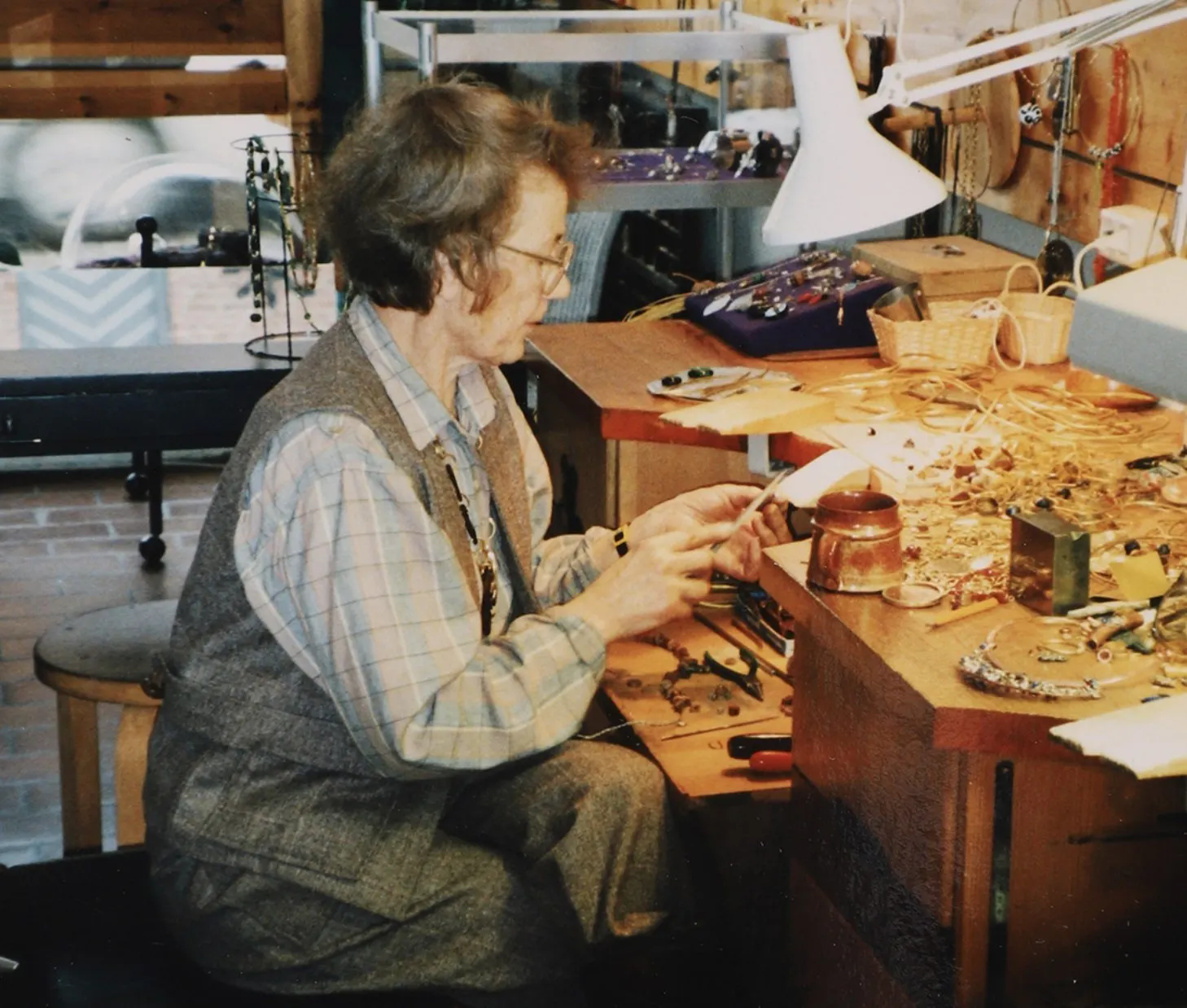
Spend the full day in Celuk Village, where the silver trade concentrates along a roughly 3 km stretch of Jalan Raya Celuk and the family compounds behind it. Plan 4–6 workshop visits at 45–60 minutes each. In the front showrooms you will see finished goods; the real evaluation happens in the back, where smiths do the work. At our own workshop, buyers typically watch I Made Sudarta — a master with 30+ years at the bench — pull filigree wire by hand, and Ni Wayan Seniasih apply jawan granulation, the technique of fusing tiny silver spheres that defines classic Balinese style. Watching a piece being made tells you in 10 minutes whether a “handmade” claim is real. To guarantee floor access rather than a showroom-only stop, book a factory tour and workshop visit in advance; ours runs about 90 minutes and walks through every stage from melting 925 grain to final polishing.
Day 3 — Ubud Galleries and Market Research
Ubud sits about 10 km north of Celuk — 30 minutes by car — and functions as your live retail laboratory. Spend the morning in 5–8 curated jewelry galleries around Jalan Monkey Forest, Jalan Hanoman, and Jalan Raya Ubud, noting which motifs (celestial, nature-inspired, minimalist stacking) dominate window displays and what tourists actually pay: gallery retail in Ubud commonly runs 3–5x Celuk factory prices for equivalent pieces. Photograph nothing inside galleries without permission; instead, keep written notes on styles, stone pairings, and price points. The afternoon Ubud Art Market visit is for contrast — much of what is sold there is plated or imported, which sharpens your eye for the difference. Resist buying inventory retail on day 3; every dollar spent in a gallery buys 3–5x less product than the same dollar spent at the factory on day 5.
Day 4 — Gianyar Factories and Production Vetting
Day 4 shifts from artistry to capacity. Larger export-oriented facilities across Gianyar regency combine hand-finishing with production systems: lost-wax casting lines, plating rooms, and QC benches. This is where you verify the operational claims that matter for reorders — ask to see the casting room, the tumbling and polishing stations, and the QC checkpoint where pieces are weighed and inspected. Confirm real lead times in writing: ready-stock designs typically ship in 3–5 business days, while custom OEM production runs 3–4 weeks from approved sample. If you plan to build your own brand, this is also the day to discuss OEM and private-label manufacturing in Bali — custom production starts from US$500, and CAD design, custom stamping, gold plating or vermeil finishes, and packaging are all decisions best made standing next to the equipment that will execute them.
Day 5 — Negotiate, Order Samples, Arrange Logistics
Return to your top 1–2 suppliers with a written target list. Place a sample order on the spot — 10–20 pieces is standard and available below MOQ — or convert directly to a first ready-stock order, which starts from just US$200 with no per-piece minimum. Agree payment terms (typically a 50% deposit with the balance before shipment, payable by Wise, PayPal, or bank/SWIFT transfer) and shipping method: insured air freight via DHL or FedEx delivers FOB Bali to most markets in 5–10 days. Confirm that your supplier handles export documentation under HS Code 7113.11 — the customs classification for silver jewelry — and get every agreed number into a proforma invoice before you leave the building. Our guide on how to import Bali silver jewelry covers the paperwork you will handle on your side.
Budgeting a Bali Buying Trip for Silver Jewelry Sourcing
Budget US$550–1,400 on the ground for 5 days, excluding international airfare, and treat your sample budget as inventory rather than expense. Airfare varies too widely by origin to generalize — commonly US$400–900 round trip from Australia or East Asia and US$900–1,600 from North America or Europe as of 2027, though sales run well below that. Everything on the island is predictable:
| Item | Typical budget (US$) | Notes |
|---|---|---|
| Visa on arrival | ~$30–35 | IDR 500,000, typically, as of 2027 |
| Accommodation, 4 nights | $120–400 | Ubud or Sanur guesthouse to mid-range hotel |
| Car + driver, 4 days | $140–200 | $35–50/day incl. fuel |
| Meals and incidentals | $75–150 | Local warung $3–5, restaurant $10–15 |
| SIM / eSIM | $5–15 | WhatsApp is essential for supplier contact |
| Sample / first-order budget | $200–600 | Ready-stock orders start at $200 MOQ |
| Total on the ground | $570–1,400 | Excludes international flights |
Timing matters as much as money. The April–October dry season is easiest for travel, and avoid scheduling meetings on Nyepi (the Balinese Day of Silence, usually in March), when the entire island — airport included — shuts down for 24 hours. Around Galungan and Kuningan, family workshops may close for several days of ceremony, so always reconfirm dates before booking flights.
Safety Tips for Visiting Celuk Village Workshops
Celuk is a safe, welcoming village — the practical risks on a buying trip are traffic, cash handling, and etiquette rather than crime. These safety tips for visiting Celuk Village workshops come from hosting hundreds of buyer visits:
- Use a car and driver, not a scooter. Road accidents are the #1 tourist injury in Bali; a driver also acts as informal translator and waits while you tour workshops.
- Limit cash. Carry no more than IDR 2–3 million (about US$125–190) for daily expenses; pay deposits by Wise, PayPal, or bank transfer, never large cash sums. Legitimate exporters do not ask for full cash payment upfront.
- Verify before you pay. Only pay deposits against a written proforma invoice with the workshop’s legal business name on it.
- Dress and behave for family compounds. Most workshops are inside family homes with temples; wear modest clothing, ask before photographing artisans, and never touch offerings (canang sari) on the ground.
- Watch for workshop hazards. Torches, acid pickle baths, and polishing wheels are live in small spaces — keep loose clothing and children clear, and follow your host’s lead.
- Travel insurance. A policy covering medical evacuation typically costs US$40–80 for a week and is worth every cent in Indonesia.
- Beware “friend of a friend” detours. Drivers or guides sometimes earn 20–40% commissions steering buyers to affiliated shops. Set your own appointment list and keep to it.
How to Vet a Silver Supplier in Person
In-person vetting comes down to five checks — metal, maker, capacity, paperwork, and references — and you can complete all five inside a 60-minute visit. Treat this as your step-by-step guide to visiting Bali to find and vet silver suppliers:
- Check the metal. Every genuine piece should carry a .925 stamp (92.5% pure silver). Ask the workshop to demonstrate an acid test on scrap, or an XRF reading if they have a gun — an XRF scan takes under 30 seconds and shows exact alloy composition. Our primer on 925 sterling silver explains what the hallmark legally means.
- Watch the making. Ask to see the specific technique behind the pieces you want — filigree, granulation, or lost-wax casting. A workshop that shows you the bench, not just the showroom, has nothing to hide.
- Verify capacity. Count benches and ask for realistic monthly output. A 6-smith family workshop producing 800–1,500 pieces a month is honest; the same workshop claiming 10,000 is not.
- Check export paperwork. A real exporter can show a registered Indonesian business license and prior export documents under HS 7113.11, and quotes FOB with insured DHL/FedEx shipping — not “your friend carries it home.”
- Ask who stands behind them. Established exporters have verifiable track records and parent structures. Bali Silver Export, for example, is a Juara Holding Group company (juaraholding.com), which is exactly the kind of corporate accountability you should look for when a deposit is about to change hands.
On-Site Negotiation: How Celuk Pricing Really Works
Celuk wholesale pricing is formula-based, not haggle-based: price = silver weight × per-gram rate + labor for complexity, so effective negotiation targets the structure, not the sticker. Per-gram rates for finished handmade 925 typically land between US$0.95 and US$1.60 depending on technique — with silver spot trading in the US$30–40/oz range in recent years, the raw metal is usually 40–60% of the piece price. That means the real levers are volume tiers (rates commonly step down 5–15% at higher order values), design complexity, and finishing options like gold plating.
Negotiate like a partner, not a tourist: present yourself with a line sheet, agree the per-gram basis first, then price 3–5 representative pieces against it. Pushing below roughly 10–15% off quoted wholesale usually just moves you to a workshop that cuts corners on alloy or finishing. Before any meeting, study the numbers in the wholesale price list from our factory-direct program so you know what fair looks like, and see our full per-gram and per-piece cost breakdown for worked examples.
Sample Strategy: What to Bring Home
Bring home 10–20 samples across 2–3 suppliers, weighted toward your best-selling category — that is enough to photograph, test with customers, and compare finishing quality side by side. Sample sets of 10–20 pieces are available below MOQ, and many buyers simply place a US$200 ready-stock order as their “sample” — it ships in 3–5 business days and doubles as sellable inventory. Log every sample with workshop name, design code, weight in grams, unit price, and lead time the moment you receive it; after 6 workshop visits, unlabeled silver all looks the same.
Carry samples in hand luggage with receipts. Small quantities for business evaluation are generally straightforward at customs, but duty-free thresholds vary by country — check your personal import allowance before flying, and declare honestly if your samples exceed it. For anything beyond a carry-on quantity, ship instead: insured air freight from Bali runs 5–10 days door to door. Before you travel, download the catalog and price list and pre-mark the designs you want to see — buyers who arrive with a marked catalog typically cover twice as many decisions per visit.
Sourcing Agent vs Going Direct
Hire a sourcing agent if you cannot travel or need many product categories at once; go direct if silver jewelry is your focus and you can invest 5 days. Local agents in Bali typically charge either 5–15% commission on order value or day rates around US$50–150 as of 2027, and a good one earns it on multi-category trips (furniture + textiles + jewelry) where relationships across industries matter.
| Factor | Sourcing agent | Direct with exporter |
|---|---|---|
| Cost | 5–15% commission or $50–150/day | No intermediary margin |
| Best for | Multi-category sourcing, no-travel buyers | Jewelry-focused buyers, custom designs |
| Design control | Filtered through a third party | Face-to-face with the silversmiths |
| Reorders | Dependent on the agent relationship | Direct WhatsApp/email line to the factory |
| Risk check | Vet the agent AND the workshops | Vet once, in person |
If you are wondering how to hire local sourcing agents in Bali for silver jewelry in 2027: ask for three verifiable foreign-buyer references, a written commission structure, and confirmation they hold no equity in the workshops they recommend. But note the modern middle path — an export house with English-speaking staff gives you agent-style convenience (consolidation, QC, export docs, DHL/FedEx logistics) at factory-direct pricing, which is precisely the gap our export team fills. Many buyers do the first trip themselves, then reorder remotely for years.
This guide is maintained by the Bali Silver Export Editorial Desk, which does not publish individual bylines.
Frequently Asked Questions
How many days do you need for a silver buying trip to Bali?
Five days is the practical minimum: one to arrive and set up, one for Celuk Village workshops, one for Ubud market research, one for Gianyar factory vetting, and one for negotiation and sample orders. Buyers adding OEM design development or gemstone sourcing should plan 7–8 days.
Do I need an appointment to visit Celuk workshops and factories?
Walk-ins can browse showrooms, but production-floor access, technical demonstrations, and wholesale pricing discussions require appointments booked 1–2 weeks ahead. Appointment visits typically run 45–90 minutes and include the workshop tour that makes in-person vetting worthwhile.
How much money should I budget for samples?
US$200–600 covers a solid first collection. Sample sets of 10–20 pieces are available below MOQ, and ready-stock wholesale orders start from US$200 with no per-piece minimum — many buyers make their sample budget double as their first sellable inventory.
Is it safe to visit Celuk Village workshops alone?
Yes — Celuk is a safe, family-based craft village and solo buyers visit daily. The practical precautions are hiring a car with a driver instead of riding a scooter, carrying limited cash and paying deposits by bank transfer or Wise, and respecting temple etiquette inside family compounds.
Can I take silver samples home in my luggage?
Generally yes for small business-evaluation quantities carried with receipts, but customs duty-free thresholds vary by country, so check your personal allowance and declare anything above it. For larger quantities, insured DHL/FedEx air freight from Bali delivers in 5–10 days and avoids airport complications.
Should I hire a sourcing agent or go direct?
Go direct if silver jewelry is your main category and you can spend 5 days on the ground — you keep the 5–15% agent commission and build the relationship yourself. Hire an agent for multi-category sourcing or if you cannot travel; alternatively, an English-speaking export house gives agent-style service at factory-direct prices.
What is the best time of year for a Bali buying trip?
April to October, during the dry season, offers the easiest logistics. Avoid Nyepi in March, when the whole island including the airport closes for 24 hours, and reconfirm workshop availability around Galungan and Kuningan ceremonies, when family workshops may pause for several days.
Source Bali Silver Directly from Celuk Village
Bali Silver Export connects wholesale buyers with Celuk Village artisans — 925 sterling silver, factory-direct pricing, worldwide shipping. Chat with our export team on WhatsApp or email [email protected].