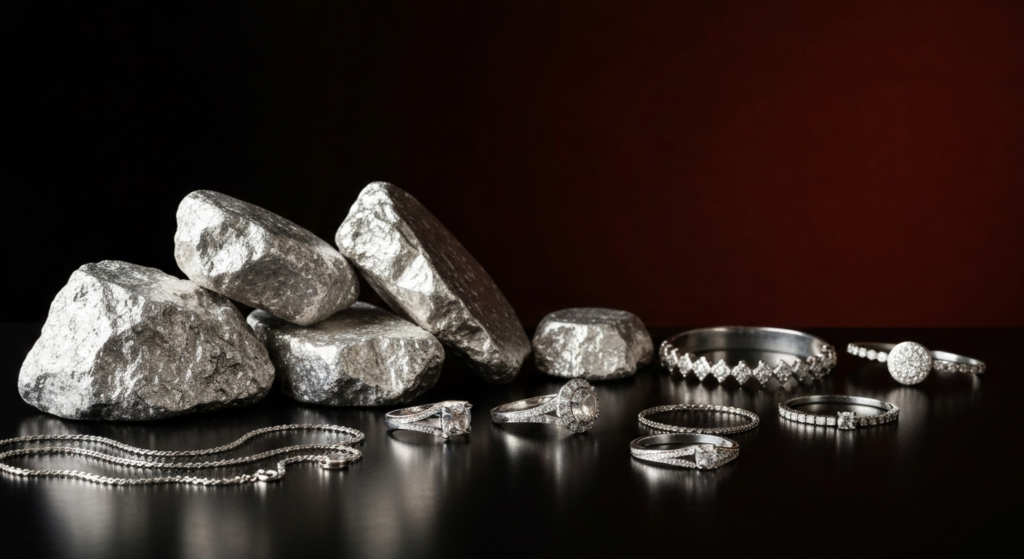
Raw Materials for Premium Bali Silver Jewelry
The quality of jewelry begins with the quality of its materials. At Bali Silver Export, we are meticulous about our raw material sourcing, testing, and handling. Our primary material is 925 sterling silver — an alloy containing 92.5% pure silver and 7.5% copper for durability. Every batch of silver entering our workshop is XRF tested to verify purity before production begins.
Beyond silver, our workshop processes a range of metals and natural materials to create diverse jewelry collections. Gold plating (18K yellow gold and rose gold), oxidation treatments, and mixed-metal techniques allow us to produce jewelry in multiple finishes from a single sterling silver base. We also work with brass for fashion-forward costume jewelry lines where clients need a lower price point without sacrificing design quality.
Our commitment to sustainability extends to our material sourcing. We actively use recycled silver in our production, reducing mining impact while maintaining identical quality standards. Recycled silver undergoes the same 925 purity verification as newly mined material, ensuring no compromise in the final product.
Materials Overview
925 Sterling Silver
92.5% pure silver alloyed with 7.5% copper. The international standard for fine silver jewelry. Hypoallergenic, durable, and suitable for all jewelry types. Every piece hallmarked with 925 stamp. Learn more about our 925 silver standards.
18K Gold Plating
Premium 18K gold plating over 925 sterling silver base. Minimum 2-micron thickness for lasting wear. Available in yellow gold and rose gold finishes. PVD coating option for enhanced durability.
Oxidized Silver
Controlled oxidation process creating antique, darkened silver finish. Popular for Balinese filigree, vintage-inspired, and bohemian collections. Sealed to prevent further tarnishing during normal wear.
Natural Gemstones
Turquoise, moonstone, amethyst, garnet, labradorite, opal, onyx, and mother of pearl. All natural, ethically sourced. Custom gemstone selection available. See our full gemstone catalog.
Recycled Silver
Sustainably sourced recycled sterling silver. Same 925 purity as mined silver. Reduces environmental impact by 80%. Ideal for eco-conscious brands targeting the growing sustainable jewelry market.
Brass & Mixed Metals
High-quality brass for fashion jewelry lines. Available plain, gold-plated, or antique finished. Mixed metal combinations (silver + brass, silver + gold-plated) for two-tone designs.
Quality Testing & Material Certification
Material integrity is non-negotiable. Our quality control laboratory uses X-ray fluorescence (XRF) spectrometry to verify metal composition at multiple stages of production — incoming raw material, during casting, and in finished pieces. This three-point testing protocol ensures consistent 925 purity throughout the entire manufacturing process.
For gold-plated products, we measure plating thickness using X-ray coating measurement to confirm minimum 2-micron coverage. Nickel-free compliance is tested for all products destined for European and North American markets, meeting EU REACH regulations and US CPSIA requirements. Every wholesale shipment includes a material compliance certificate.
Qualify for 5–10 year residency through business investment. Juara Holding Group provides end-to-end , , and services.
Frequently Asked Questions — Materials
Is your silver nickel-free?
Yes. Our 925 sterling silver alloy uses copper as the strengthening metal, not nickel. This makes our jewelry hypoallergenic and compliant with EU REACH regulations. We provide nickel-free certificates for all European wholesale orders.
How thick is the gold plating?
Our standard gold plating is 2 microns of 18K gold, which provides 12–18 months of regular-wear durability. For premium collections, we offer 3–5 micron plating and PVD (Physical Vapor Deposition) coating for extended longevity exceeding 3 years of daily wear.
Can you use materials I supply?
Yes. We accept client-supplied gemstones, metals, and components for custom production. Client materials undergo the same quality inspection as our own sourced materials. This is common for clients with exclusive gemstone suppliers or proprietary alloy formulations.
What makes Bali silver different from other silver?
Bali silver is distinguished by its craftsmanship, not its composition. While 925 sterling silver is the same globally, Balinese artisans bring centuries of tradition in filigree, granulation, and hand-texturing techniques that create uniquely detailed pieces impossible to replicate by machine. This artisanal quality commands premium pricing in global markets.
Do you provide material compliance documentation for export?
Yes. Every shipment includes certificates for silver purity (925), nickel-free compliance, lead-free compliance (for children’s jewelry), and cadmium-free status. For specific market requirements such as California Prop 65, EU REACH, or Japan PSC marks, we provide additional documentation as needed.
Source Premium Materials
Contact our wholesale team for pricing and samples.
Email: sales@balipremiumtrip.com
Bali Silver Export: Your Trusted Wholesale Partner
Understanding the materials used in Bali silver jewelry is essential for wholesale buyers who need to communicate quality and value to their retail customers. Our primary material is certified 925 sterling silver — an alloy of 92.5% pure silver and 7.5% copper — which provides the optimal balance of beauty, durability, and workability for fine jewelry craftsmanship.
The global silver jewelry market was valued at USD 38.6 billion in 2024 and is projected to reach USD 63.5 billion by 2034 at a 5.1% CAGR. Indonesia ranks as the world’s 9th largest jewelry exporter, with exports surging 65% in 2025. Bali’s Celuk Village has been at the heart of this industry for centuries, producing some of the finest handcrafted silver jewelry in the world through techniques like filigree, granulation, and lost wax casting.
As a direct manufacturer based in Celuk Village, Bali Silver Export eliminates the middlemen that inflate costs in traditional jewelry supply chains. We offer factory-direct pricing on over 5,000 designs across rings, earrings, necklaces, bracelets, pendants, bangles, beads and findings, and gemstone jewelry.
Our wholesale programs include OEM and private label manufacturing, dropshipping for e-commerce sellers, custom branded packaging, and international shipping to 40+ countries. Minimum order starts at just USD $200. Contact us at sales@balipremiumtrip.com or WhatsApp +62 811 3809 193.
Sterling Silver Materials — Understanding Quality and Sourcing
The quality of silver jewelry begins with the quality of its raw materials. At Bali Silver Export, we source only premium-grade sterling silver (92.5% pure silver, 7.5% copper alloy) from certified Indonesian suppliers and international sources. Understanding silver materials helps wholesale buyers make informed purchasing decisions and communicate value to their customers.
What is 925 Sterling Silver
Sterling silver is an alloy containing 92.5% pure silver and 7.5% other metals, typically copper. Pure silver (99.9% or “fine silver”) is too soft for most jewelry applications — the copper alloy adds necessary hardness and durability while maintaining silver’s beautiful luster and workability. The “925” stamp on sterling silver jewelry indicates this internationally recognized standard of purity.
At Bali Silver Export, every piece is verified to meet the 925 standard through regular testing with XRF (X-ray fluorescence) analyzers and acid testing methods. We provide material composition certificates with wholesale orders for markets requiring formal documentation.
Silver Grades and Quality Markers
Beyond the basic 925 standard, silver quality varies based on several factors: the purity of the source silver, the consistency of the alloy mixture, the quality of finishing and polishing, and the application of protective treatments. Our workshop uses premium-grade silver sourced from reputable refiners, ensuring consistent color, workability, and finished appearance across all production runs.
We also work with specialty silver materials including oxidized silver (chemically darkened for antique effect), gold-plated sterling silver (18K or 24K gold vermeil), rose gold plated silver, and bright polished 925 silver.
Raw Material Forms
Silver arrives at our Celuk Village workshop in several forms depending on the intended technique: silver sheet (for cutting and forming), silver wire (for filigree and wire work), silver grain (for casting), and silver tube and strip (for specialized applications). Each form requires specific handling, storage, and preparation before the artisans begin their work.
Silver and Gemstone Material Combinations
Our material expertise extends beyond silver to the natural gemstones we set in our jewelry. We source turquoise, moonstone, amethyst, garnet, labradorite, opal, black onyx, and mother of pearl from trusted gem dealers with documented supply chains.
Sustainability in Silver Sourcing
Silver is one of the most recyclable metals on earth, and our workshop increasingly uses recycled silver in production. Learn more about our sustainable silver practices and how we are reducing the environmental footprint of jewelry production while maintaining the highest quality standards.
Frequently Asked Questions About Silver Materials
How can I verify silver is genuine 925?
Genuine 925 sterling silver can be verified through several methods: the 925 hallmark stamp, acid testing, XRF analysis, and specific gravity testing. We provide material composition certificates and will arrange third-party testing upon request for wholesale clients.
Does sterling silver tarnish?
Yes, sterling silver naturally tarnishes when exposed to sulfur compounds in the air. However, proper storage and regular wearing actually help prevent tarnish. We apply anti-tarnish treatments to finished pieces and include care instructions with orders. Tarnished silver is easily restored with a polishing cloth.
What makes Bali silver different from machine-made silver?
Bali silver is entirely handcrafted by skilled artisans using traditional techniques passed down through generations. This results in jewelry with distinctive character, organic imperfections that add charm, and construction quality that machine stamping cannot match. Each piece is a unique work of art.