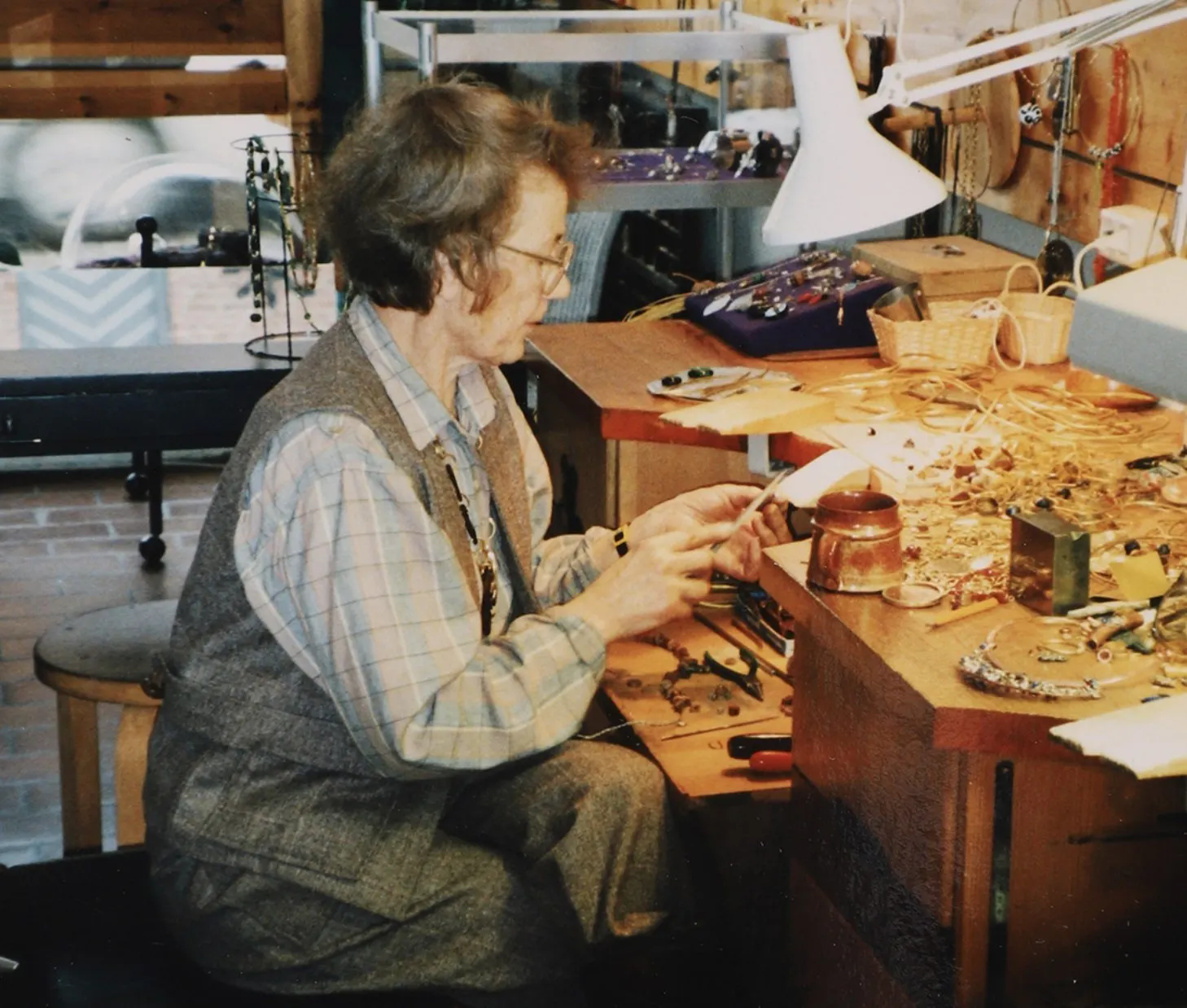
The fastest way to verify a silver supplier in Bali is to demand three things before any money moves: a .925 hallmark policy backed by written assay documentation, a live video call from the actual workshop floor, and a small paid sample order of 10–20 pieces. A supplier who dodges even one of those three is waving the exact red flags that appear in almost every Bali silver scam story we hear from buyers. After fielding 45+ wholesale inquiries from 15+ countries in 2026 alone — many from boutique owners who had already been burned once — we have seen the same 7 warning signs repeat again and again.
This guide breaks down each red flag: what it actually means, the math behind it, and how a legitimate wholesale Bali silver jewelry supplier behaves instead. At the end you will find a 10-point Bali silver supplier verification checklist you can copy into your sourcing notes and run against any exporter — including us.
The 7 Red Flags at a Glance
So what are the red flags when buying wholesale from Bali? These seven show up most often when a deal goes wrong. If a supplier trips 2 or more of them, walk away — the simplest way to avoid a fake Bali silver supplier is remembering that hundreds of legitimate workshops operate in the Celuk–Gianyar corridor, so you never need to gamble on a suspicious one.
| # | Red flag | What it usually means |
|---|---|---|
| 1 | No 925 certificate or assay documentation | Metal purity is unverified — possibly plated brass or low-grade alloy |
| 2 | Refuses video call or factory tour | No workshop exists, or the “factory” is a middleman’s living room |
| 3 | Prices below spot-silver math | Mathematically impossible for real 925 — the metal is fake |
| 4 | Demands 100% payment upfront | Classic exit-scam structure with zero buyer leverage |
| 5 | No verifiable physical address | Nothing to trace if the shipment never arrives |
| 6 | Stock photos only | Catalog images stolen from real workshops — they hold no inventory |
| 7 | No sample option | They cannot produce what they advertise — or quality collapses at scale |
Red Flag #1: No 925 Certificate or Assay Documentation
A supplier who cannot show any written proof of metal purity should be treated as unverified — full stop. Genuine 925 sterling silver is a legally defined alloy of 92.5% pure silver and 7.5% copper (or similar base metal), and any exporter working at wholesale scale can document that composition.
What it means: “Trust me, it’s 925” is not documentation. Sellers pushing plated brass, nickel alloy, or so-called “Tibetan silver” (which typically contains little to no silver at all) rely on buyers never asking for proof. By the time your customers’ skin reacts or the plating wears through — often within 2–6 months of daily wear — the seller has vanished.
How a legitimate supplier behaves: Every piece we ship carries the .925 hallmark stamp, and we provide batch-level assay documentation and material declarations on request with every export shipment. Our in-house quality control service checks stamping, weight, and finish on 100% of pieces before packing — and we encourage buyers to run their own XRF or acid test on arrival. If you want the technical details of testing, see our guide on how to spot real 925 silver with stamps, acid tests and XRF.
Red Flag #2: Refuses a Video Call or Factory Tour
Any real workshop in Bali can point a phone camera at its benches within 24–48 hours — a supplier who refuses a live video call has something to hide. In 2026, a 15-minute WhatsApp video walkthrough is the single cheapest verification step available to an overseas buyer, and it costs the supplier nothing.
What it means: Refusal usually signals one of two things. Either there is no workshop at all (the “supplier” is a laptop and a stolen catalog), or the operation is a reseller marking up someone else’s production by 30–100% while pretending to be a manufacturer. Watch for excuses that keep moving: “the workshop is closed for ceremony,” “the camera is broken,” “we will send a video later” — followed by a generic clip that could have been filmed anywhere.
How a legitimate supplier behaves: We do the opposite — we invite it. Buyers can book a live video call with our export team and see benches, casting equipment, and current orders in progress, or visit in person through our factory tour and silver workshop program in Celuk Village, Gianyar. On a live call, ask the supplier to show you a piece from your quote being worked on, the hallmark stamping station, and the packing area. A genuine silversmith can do all three without hesitation; our master artisans — including I Made Sudarta, who has worked filigree for over 30 years — do it weekly.
Red Flag #3: Prices Below Spot-Silver Math (Here’s the Math)
If a quoted price per gram is below the raw metal value of sterling silver, the product cannot be real 925 — no exceptions, no “special Bali discount.” This is the most reliable scam filter in the entire industry because it is pure arithmetic.
Run the numbers yourself. As of late 2026 and heading into 2027, spot silver has typically traded in a broad range of roughly $35–45 per troy ounce (one troy ounce = 31.1 grams). That yields the following floor:
| Step | Calculation | Result (approx.) |
|---|---|---|
| Spot silver per gram | $35–45 ÷ 31.1 g | $1.13–1.45/g fine silver |
| 925 alloy metal value | × 0.925 silver content | $1.04–1.34/g raw metal |
| Handmade labor, finishing, overhead | + $0.70–2.00/g typically | added on top |
| Realistic wholesale floor | metal + work | ≈ $1.80–3.30/g |
Worked example: a 20-gram handmade bangle contains roughly $21–27 of metal alone at those spot levels. If someone offers you that “sterling silver” bangle for $9, they are selling it 55–65% below the value of its own raw material. Either it is plated brass, or the listing is bait for an exit scam. A real Celuk workshop cannot melt money and stay in business — nobody can.
How a legitimate supplier behaves: We quote transparently on a per-gram basis tied to the current silver market, plus a clearly stated work component that varies with technique — granulation and filigree cost more labor than minimalist pieces. Our full breakdown is in the Bali silver wholesale pricing guide with per-gram and per-piece costs. If a quote ever looks surprisingly low, ask the supplier to show their gram weight and current spot reference. We do that math with buyers on live calls, line by line.
Red Flag #4: Demands 100% Payment Upfront
Full payment before production is the payment structure of an exit scam, not of a working export business. Once 100% of your money is gone, you have zero leverage — and with international wire transfers, recovery is rarely realistic once funds leave your bank.
What it means: Legitimate Bali exporters carry material costs all the time; it is a normal part of the business. A “supplier” who cannot buy silver without your entire payment either has no working capital (a serious operational risk even if honest) or never intends to ship. Pressure tactics stack on top: “price valid 24 hours only,” “another buyer wants this stock,” “pay today for discount.” Urgency plus full prepayment is the classic one-two of every wholesale scam, in any industry.
How a legitimate supplier behaves: The industry-standard structure — and the one we use — is a 50% deposit to begin production and the 50% balance before shipment, after you have received photos and videos of your actual finished order. We accept Wise, PayPal, and bank/SWIFT transfer, all of which leave a clean paper trail tied to a registered business. First orders start from around $200 MOQ, so a new buyer’s total exposure at the deposit stage is often just $100 — a deliberate design so you can test us before scaling.
Red Flag #5: No Verifiable Physical Address
A wholesale exporter with no traceable street address is a counterparty you cannot pursue if anything goes wrong. “Bali, Indonesia” is not an address — it is an island of over 4 million people.
What it means: Real export businesses need a physical location for production, packing, and courier pickup, and in Indonesia they operate with business registration and a tax ID (NPWP) that customs paperwork references. A seller who lists only a WhatsApp number, uses a free email domain, and goes vague when asked “where exactly is your workshop?” fails the most basic due-diligence test. Cross-check whatever address you are given: it should appear consistently on the website, invoices, and shipping documents, and it should sit in a plausible location — most genuine silver workshops cluster in Celuk Village and the surrounding Gianyar regency, Bali’s silversmithing heartland for generations.
How a legitimate supplier behaves: Our workshop address in Celuk, Gianyar appears on every invoice, packing list, and export document we issue, and export shipments reference HS Code 7113.11 with full commercial paperwork. Buyers are welcome to drop a pin on the map, send a local agent, or simply show up during a Bali trip — dozens do every year as part of our factory tour program.
Red Flag #6: Stock Photos Only — No Real Production Imagery
If every image a supplier shows you is polished catalog photography and none of it shows benches, hands, or work in progress, assume the photos are not theirs. Image theft is rampant: scammers routinely lift entire catalogs from legitimate workshops and undercut the real maker’s price by 30–50% — for products they do not possess.
What it means: Counterfeit catalogs are one of the most common patterns in wholesale jewelry fraud, and Bali’s global reputation makes its designs a favorite target. Two quick tests expose it: run a reverse-image search on 3–5 catalog photos (stolen images usually surface on the original maker’s site or on multiple unrelated “suppliers”), and ask for a custom proof photo — the piece you are quoting next to a handwritten note with today’s date and your name. A thief cannot produce that in an afternoon; a workshop can do it before lunch.
How a legitimate supplier behaves: We send proof photos and videos of your actual order at three stages — production, QC, and packing — as standard practice, not as a favor. Our catalog is shot in our own workshop, and buyers on video calls regularly see the very pieces from those photos on the finishing benches. You can also read what verified buyers say on our testimonials page, where feedback ties to real orders shipped to 15+ countries.
Red Flag #7: No Sample Option
A manufacturer who refuses to sell samples is telling you they cannot — or dare not — show you their real quality before you commit. Samples are the wholesale industry’s handshake; refusing one breaks the entire logic of B2B sourcing.
What it means: Excuses vary — “samples not worth our time,” “minimum 500 pieces or nothing,” “sample price only after full order” — but the effect is identical: you are asked to bet thousands of dollars on unverified quality. Even when the seller is not an outright scammer, a no-sample policy hides problems that only appear in your hands: thin gauge metal, rough solder joints, weak clasps, plating that discolors in weeks. A single bad container can sink a small boutique’s season; samples costing $50–150 are the insurance against that.
How a legitimate supplier behaves: We offer sample orders of 10–20 pieces before any bulk commitment, priced at wholesale rates plus courier cost, shipped insured via DHL or FedEx in 5–10 days. Roughly half of our long-term buyers started with a sample box — exactly as they should. Samples also let you test our sizing, packaging, and hallmark stamping against your home market’s standards before scaling to full production runs.
The 10-Point Bali Silver Supplier Verification Checklist
Use this Bali silver supplier verification checklist before sending any deposit — it is exactly how to verify a silver supplier in Bali, step by step. A trustworthy exporter passes all 10 points without friction; if you are wondering how to find a trustworthy Bali silver supplier, this list is the method. It takes about 3–5 business days to run in full.
- Written 925 documentation. Request assay/material documentation and a stated hallmark policy in writing before quoting ends.
- Live video call from the workshop. Not a pre-recorded clip — live, with your quoted pieces or similar work visible on the benches.
- Spot-price sanity check. Divide the quote by gram weight; anything below roughly $1.30–1.50/g for finished handmade 925 (at 2026–2027 silver prices) deserves hard questions.
- Verifiable street address. Consistent across website, invoice, and shipping docs — ideally in the Celuk/Gianyar area with a droppable map pin.
- Business registration & export paperwork. Ask how they document exports (commercial invoice, packing list, HS Code 7113.11). Blank stares are disqualifying.
- Reverse-image search their catalog. Test 3–5 photos. Stolen imagery is an instant walk-away.
- Custom proof photo. Product + handwritten note with your name and today’s date, delivered within 24–48 hours.
- Sample order first. 10–20 pieces, insured courier, tested with acid or XRF on arrival before any bulk order.
- 50/50 payment terms on a traceable rail. Deposit/balance structure via Wise, PayPal, or SWIFT to a business account — never full prepayment to a personal account.
- Independent references. Ask for 2–3 existing buyer references or verifiable reviews, and cross-read guides like our post on how to find a reliable sterling silver jewelry supplier.
One more habit worth keeping: document everything. Save quotes, chat logs, invoices, and proof photos in one folder per supplier. If a dispute ever arises, PayPal and Wise resolutions — and Indonesian consumer channels — move dramatically faster when your paper trail is complete. And if a supplier ever objects to being verified this thoroughly, that objection is itself red flag #8: a trusted Bali silver wholesale partner treats due diligence as free marketing, because they pass it.
Frequently Asked Questions
How do I verify a silver supplier in Bali is legitimate?
Run the 10-point checklist above: written 925 documentation, a live workshop video call, a spot-price sanity check, a verifiable Celuk/Gianyar address, export paperwork knowledge, reverse-image-searched catalog photos, a custom proof photo, a 10–20 piece sample order, 50/50 payment terms on traceable rails, and independent buyer references. A legitimate supplier clears all 10 within about a week; a fake one usually fails by step 3.
Are there any scam silver suppliers in Bali?
Yes — as in every major sourcing hub, a small fraction of sellers targeting overseas buyers are fraudulent, typically operating online-only with stolen catalogs and full-prepayment demands. The overwhelming majority of actual Celuk Village workshops are honest family businesses that have made silver for generations. The scams cluster around anonymous online listings, not around verifiable workshops that welcome tours and video calls.
How to verify a Bali silver jewelry supplier is legitimate before sending a large payment?
Never make a large payment the first transaction. Sequence your exposure: video call first (free), sample order second ($50–150), small trial order third (around the $200 MOQ level), and only then scale. Keep the 50% deposit / 50% balance structure at every stage, and pay through Wise or PayPal to a registered business account so a dispute path exists.
How to check if a Bali silver manufacturer has a real workshop or is just a reseller?
Ask for a live video walkthrough showing three specific things: your quoted design in production, the hallmark stamping station, and raw silver stock. Resellers can show a showroom but not a working bench making your piece. Follow up by asking technique questions — a real manufacturer can explain exactly how their granulation or lost-wax casting is done, and can put the silversmith on camera.
Is it safe to pay Bali silver suppliers via wire transfer?
Bank/SWIFT wire transfer is safe with a verified supplier but offers the weakest buyer protection if something goes wrong, since wires are hard to recall once settled. For a first order with any new supplier, prefer Wise or PayPal, which add identity verification and a dispute mechanism. Reserve plain wires for established relationships — and always pay to a business account matching the supplier’s registered name, never a personal account.
What are red flags when communicating with Bali silver jewelry suppliers?
Watch for artificial urgency (“price expires tonight”), refusal to do live video, evasive answers about address or registration, prices below spot-silver math, requests for payment to personal accounts, and stalling when you ask for proof photos with your name and date. Sloppy grammar alone is not a red flag — many superb Balinese silversmiths write imperfect English — but evasion under polite, specific questioning always is.
How common is counterfeit branding among silver jewelry suppliers in Bali?
Counterfeit purity marks — fake “.925” stamps on plated or low-grade metal — are the most common form of counterfeiting in the trade, which is why testing matters more than trusting a stamp. Estimates vary, but buyers should assume any unverified online seller could be stamping falsely and should confirm with an acid test or XRF reading on samples. Buying from workshops that document their alloy and welcome third-party testing effectively eliminates the risk.
This guide is maintained by the Bali Silver Export Editorial Desk, which does not publish individual bylines.
Source Bali Silver Directly from Celuk Village
Bali Silver Export connects wholesale buyers with Celuk Village artisans — 925 sterling silver, factory-direct pricing, worldwide shipping. Chat with our export team on WhatsApp or email [email protected].