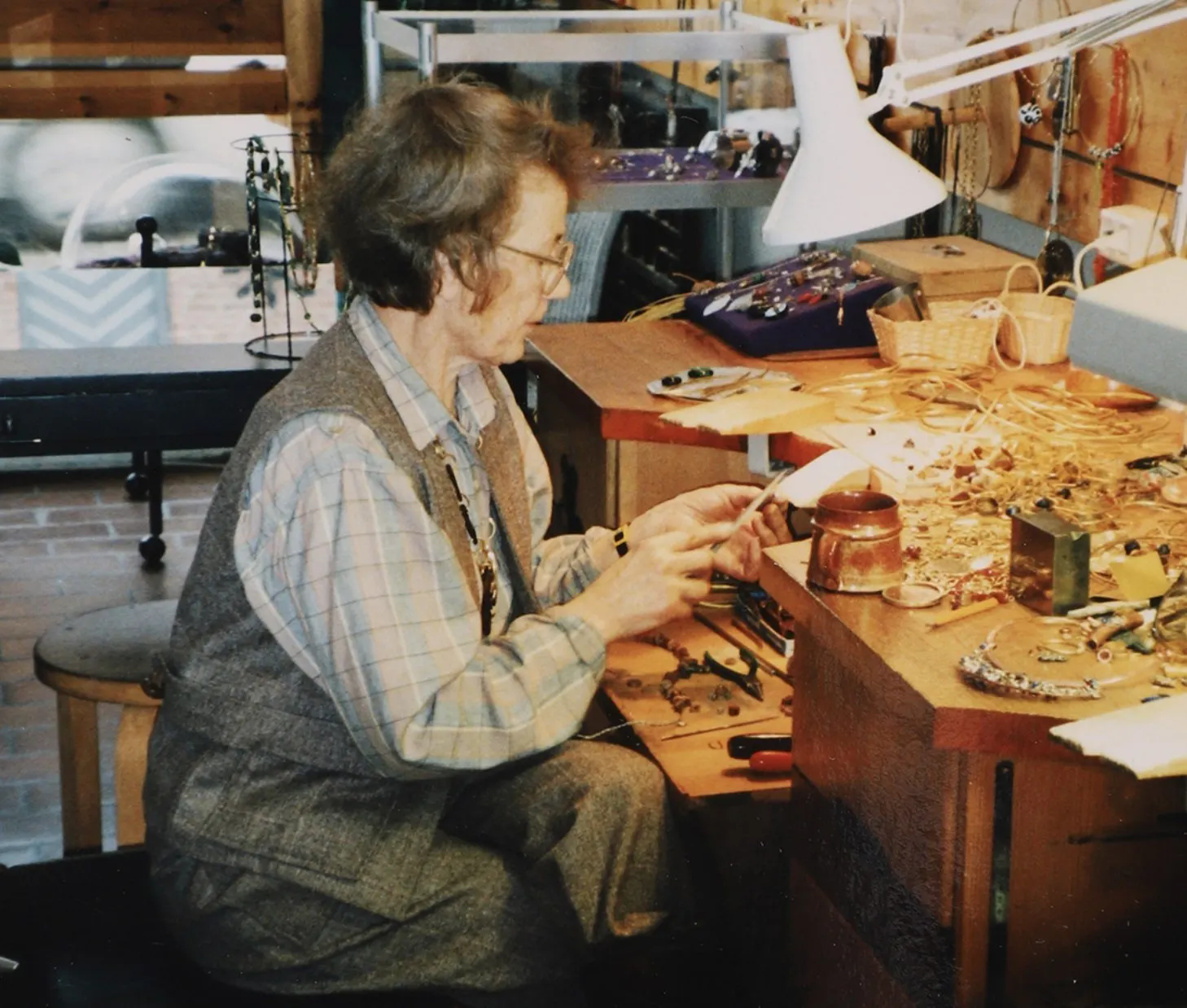
A silver jewelry quality control checklist for importers covers ten inspection points: purity verification, solder-joint integrity, clasp function, stone-setting security, plating thickness, finish consistency, weight tolerance, tarnish resistance, packaging condition, and documentation. Run all ten before a shipment leaves Bali — not after it lands — and you convert quality from a hope into a contract term. Buyers who inspect pre-shipment typically resolve issues in days at the factory’s cost; buyers who discover defects after import absorb return freight, re-listing delays, and marketplace review damage.
This is the buyer-side playbook we wish every new importer received with their first order. It is written from the factory floor: our QC lead in Celuk Village, Ni Luh Putu Ayu Kartini, checks every outbound piece against the same points listed below, and a third-party-verifiable quality control service is built into every order we ship. Whether you buy from us or any other wholesale Bali silver jewelry supplier, use this checklist as your minimum standard. Handmade 925 sterling silver is not machine-made product — a realistic handmade defect rate runs around 2–5% before QC, versus under 1% for cast machine production — which is exactly why a structured checklist matters more here than in any other jewelry category.
The 10-Point Silver Jewelry Quality Control Checklist
Use this table as your master inspection sheet. It works for a 10-piece sample set and for a 1,000-piece production run alike — the only thing that changes is the sampling rate (100% for samples, AQL-based sampling for volume, covered further down).
| # | Checkpoint | What to inspect | Pass standard | Tool |
|---|---|---|---|---|
| 1 | Purity | .925 stamp present + metal content | 92.5% silver minimum; XRF reading 92.5% ±0.5% | Loupe, XRF analyzer or acid kit |
| 2 | Solder joints | Every join under 10x magnification | No gaps, pits, or grey solder lines; smooth transition | 10x loupe |
| 3 | Clasps & findings | Open/close cycles, spring tension, jump rings | 10 open-close cycles without failure; jump rings soldered closed | Hands + loupe |
| 4 | Stone settings | Prong count, bezel seating, stone movement | No rattle or rotation; prongs seated on the crown, not the girdle edge | Fingernail/probe test |
| 5 | Plating thickness | Gold plating microns (if applicable) | Matches spec: ~0.5 micron flash, 1–2 microns standard, 2.5+ microns for vermeil | XRF coating mode / supplier report |
| 6 | Weight tolerance | Gram weight vs approved sample | Within ±5% of reference piece | 0.01 g digital scale |
| 7 | Finish consistency | Polish, oxidation, texture across the batch | Uniform under daylight lamp; no visible scratches at 30 cm | 5000K light box |
| 8 | Tarnish resistance | Anti-tarnish treatment spot check | No yellowing after 24–48 h humid exposure on sample pieces | Humidity spot test |
| 9 | Packaging | Anti-tarnish strips, individual bagging, box integrity | Each piece in sealed poly bag with anti-tarnish strip | Visual |
| 10 | Documentation | Packing list, invoice, purity statement, photos | Piece counts match PO; QC photos supplied before dispatch | Checklist sign-off |
Print it, share it with your supplier before you place the order, and make passing it a written condition of final payment. Serious factories welcome this — at Bali Silver Export the same sheet is attached to every order confirmation from the US$200 ready-stock minimum upward, and QC photos are sent on WhatsApp before the 50% balance is due.
Step 1: Purity Verification — Stamp, XRF, and Acid Test
Verify purity in two layers: confirm the .925 stamp is present and legible on every piece, then test actual metal content on a sample with XRF or an acid kit. A stamp alone proves nothing — it is a manufacturer’s claim, not a certificate — so at least one instrument test per batch is the professional standard.
Sterling silver must contain a minimum of 92.5% pure silver, with the remaining 7.5% typically copper. A handheld XRF analyzer reads surface composition non-destructively in about 30 seconds with roughly ±0.5% accuracy, which is why third-party inspectors and assay labs use it as the default screen. Acid testing is cheaper (a kit costs around US$15–30) but slightly destructive, since you rub or file a small spot. For plated pieces, remember XRF reads the surface: ask the inspector to test on a filed notch or use the analyzer’s coating mode. We covered the full verification workflow — stamps, acid tests, XRF, ice and magnet myths — in our companion guide, How to Spot Real 925 Silver: Stamps, Acid Test & XRF Verification, and the metallurgy basics live on our 925 sterling silver reference page.
One vetting note for 2027: more buyers now ask suppliers for third-party assay reports before the first order, and it is a reasonable request. A reputable Bali factory can provide an XRF reading from an independent lab in Denpasar or include instrument testing in a pre-shipment inspection scope. If a supplier refuses any independent purity verification, treat it as a disqualifying red flag — our post on wholesale silver red flags in Bali lists this among the top warning signs.
Step 2: Solder Joints, Clasps, and Structural Integrity
Inspect every solder joint under a 10x loupe and cycle every clasp ten times — structural failures, not purity problems, are the most common reason customers return handmade silver. A weak joint that survives the photo shoot will not survive three months of daily wear.
What a good solder joint looks like
Balinese silversmiths solder by torch, joint by joint — a single filigree pendant can carry 30–60 individual joins. Under magnification a sound joint shows a smooth, continuous metal transition with no dark line, no pinholes, and no excess solder blob. The three failure patterns to reject: cold joints (visible seam or gap where solder never flowed), porosity (clusters of tiny pits that become break points), and over-fluxed grey staining that signals rushed work. Flex chain ends and earring posts gently between your fingers; a proper joint has zero give.
Clasp and finding function tests
For lobster and spring-ring clasps, open and close each mechanism ten times: the spring should return crisply every cycle, with no grinding or sticking. Check that jump rings connecting clasps to chains are soldered closed, not just butted — an unsoldered jump ring is the single cheapest corner a low-end workshop can cut, and it causes the majority of “necklace fell off” complaints. Toggle bars should sit flat, hook clasps should require deliberate pressure to open, and earring butterfly backs should grip the post firmly at three positions. On a typical mixed order, findings checks catch more rejects than any other checkpoint — usually 40–50% of all defects flagged.
Step 3: Stone Settings and Plating Thickness
Test every set stone with a fingernail or plastic probe — any rattle, rotation, or visible gap under the girdle is a reject — and verify plating thickness in microns against your purchase order, not against a vague word like “gold plated”.
For prong settings, count the prongs (4 or 6 on most Bali designs) and confirm each tip is rounded, polished, and bearing on the stone’s crown. For bezels — the most common Celuk setting for cabochons like moonstone, turquoise, and mother of pearl — run a probe around the full rim: the metal should press the stone evenly with no lifting sections. Softer stones (opal at 5.5–6.5 Mohs, moonstone at 6–6.5) chip if the bezel was hammered rather than burnished, so check edges under the loupe for micro-fractures.
Plating is where specifications matter most. Industry practice distinguishes flash plating (around 0.175–0.5 micron, decorative only, wears in weeks), standard plating (1–2 microns), and vermeil, which under US FTC guidance typically requires gold of at least 10k fineness at a minimum thickness of 2.5 microns over sterling silver. If you sell “gold vermeil”, your QC must confirm 2.5 microns — an XRF in coating mode measures this directly. Put the micron figure on the purchase order and have the inspector record readings on 3–5 random pieces. Our gold plating and vermeil service plates to specified thickness and states the micron level on the order confirmation, which is the paper trail your marketplace compliance team will want.
Step 4: Weight Tolerance ±5% and Finish Consistency
Weigh 10–20 random pieces per style on a 0.01-gram scale and compare against your approved reference sample: handmade sterling should land within ±5% of the sample weight. Weight is the fastest single proxy for quality drift — silver is priced per gram, so a batch running 8–10% light means the factory thinned the metal to protect its margin after a silver price move.
A worked example: if your approved ring sample weighs 4.20 g, the acceptable band is roughly 3.99–4.41 g. One outlier is handmade variance; a whole batch clustered at the bottom of the band or below it is a commercial decision someone made without telling you. Weight checks matter even more in 2027 with silver trading at historically elevated levels — the incentive to shave grams has never been higher. Reputable exporters publish per-gram pricing openly; you can see how per-gram and per-piece pricing interact in the wholesale price list.
Finish consistency is checked under a daylight-balanced lamp (around 5000K): line up 10 pieces of the same SKU and look for polish variation, leftover firescale (purplish-grey oxide bloom), and uneven antique oxidation on darkened designs. On oxidized pieces, the patina should sit in the recesses with polished high points — uniform grey means the piece skipped the final polish pass. Accept minor artisanal variation (that is the point of handmade), reject visible scratches at 30 cm viewing distance, machine marks, or oxidation that rubs off on a white cloth.
Step 5: Tarnish-Resistance Spot Checks
Run a simple humid-exposure test on 2–3 sacrificial pieces per shipment: leave them unbagged in a warm, humid spot for 24–48 hours (a sealed container with a damp cloth nearby simulates tropical transit). Properly finished and anti-tarnish-treated sterling shows no visible yellowing in that window; rapid yellow-to-brown shift suggests the anti-tarnish dip was skipped or the alloy is off-spec.
Some context so you reject the right pieces: all sterling silver tarnishes eventually — the 7.5% copper reacts with sulfur compounds in air — so tarnish resistance is about surface treatment and packaging, not a magic alloy. Formal laboratory tarnish testing exists (thioacetamide-atmosphere methods used by assay labs, typically run over 24 hours), but for an importer the practical standard is the spot check above plus packaging discipline: each piece sealed in its own poly bag with an anti-tarnish strip, which typically protects for 6–12 months in storage. If you retail in humid markets, ask your supplier to include e-coat (clear lacquer) on high-touch styles like wholesale silver rings — it adds pennies per piece and cuts tarnish complaints dramatically.
Common Defects in Handmade Bali Silver — and How to Catch Them
The seven defects below account for the overwhelming majority of rejects in handmade 925 production; know them and your incoming inspection becomes fast and surgical. None of them are exotic — every one is visible with a loupe, a scale, and ten minutes of method.
| Defect | What it looks like | How to catch it pre-import |
|---|---|---|
| Porous casting | Pinhole clusters on cast sections | 10x loupe scan of thickest cast areas |
| Cold/incomplete solder | Visible seam, dark line at join | Loupe + gentle flex test on every join |
| Unsoldered jump rings | Hairline gap in the ring | Twist test with two pliers or probe |
| Loose stones | Rattle, rotation, lifted bezel edge | Fingernail probe on 100% of set pieces |
| Underweight batch | Pieces >5% lighter than sample | Weigh 10–20 pcs per style on 0.01 g scale |
| Thin/patchy plating | Color fade at edges, micron shortfall | XRF coating mode on 3–5 random pieces |
| Sharp edges/burrs | Snags on cloth, scratchy earring posts | Cotton-glove pass over the whole piece |
Two calibration notes. First, distinguish defects from handmade character: slight asymmetry in granulation spacing or hammer texture is authentic Celuk workmanship (each of our artisan families works entirely by hand, a tradition documented on our Celuk Village page); a loose stone is a defect everywhere in the world. Write both lists into your purchase order so the factory and the inspector share your definitions. Second, set your acceptable quality limit before the order — most jewelry importers work to AQL 2.5 for major defects and 4.0 for minor cosmetic ones, meaning a 500-piece order sampled at 50 pieces passes with at most 3 major defects found. That single sentence in your PO removes 90% of future arguments.
How to Set Up Third-Party Pre-Shipment Inspection in Bali
Book a third-party inspection 5–7 days before your planned ship date, send the inspector your checklist and approved sample photos, and make “inspection passed” a written release condition for your balance payment. The entire setup takes one email thread and typically costs US$150–300 per man-day as of 2027 — trivial insurance on a US$3,000–10,000 order.
The process in five steps:
1. Choose the inspection route
You have three options: an international inspection agency with Indonesian coverage (the global names all serve Bali, typically from Surabaya or Jakarta with travel added), a local Bali-based QC freelancer (cheaper, often US$100–200 per day, best found through buyer referrals), or the factory’s own documented QC with photo and video evidence — sufficient for reorders of proven styles, not for first orders. Many buyers combine routes: third-party for order one, supplier QC with photo protocol from order two onward.
2. Send the inspection scope
Forward this article’s 10-point table, your AQL levels, the approved sample photos with gram weights, and your defect definitions. An inspector without a scope defaults to generic checks and misses jewelry-specific failures like unsoldered jump rings.
3. Coordinate timing with the factory
Inspection happens when goods are 100% complete and packed — for ready-stock orders that can be within the 3–5 business day dispatch window, while custom OEM production (3–4 weeks) should have inspection booked for the final week. Any factory that resists an announced inspection date is telling you something.
4. Review the report before paying the balance
A proper report arrives within 24 hours with photos of every defect found, measured weights, and a pass/fail against your AQL. Under the standard 50% deposit / 50% before-shipment structure, the balance payment is your leverage: pass → pay → ship; fail → factory reworks at its own cost and re-inspects.
5. Keep the paper trail
Archive reports, photos, and XRF readings per order. Marketplaces, insurers, and customs authorities all occasionally ask for proof of due diligence, and a QC archive also powers your defect-rate tracking across suppliers. Transparency on this front is a group-level policy for us — Bali Silver Export operates as a Juara Holding Group company, and inspection access for buyers and their agents is standard on every order. If you would rather not orchestrate this yourself, our in-house pre-shipment inspection and QC service runs the full 10-point protocol with photo documentation on every order, and welcomes any external inspector you appoint. You can also verify workmanship in person — the factory tour in Celuk is open to wholesale buyers year-round, and sample sets of 10–20 pieces are available below MOQ so you can run this entire checklist on your desk before committing.
Defect-Claim Timeline and Replacement Policy
Agree the defect-claim window in writing before your first order: the workable industry standard is photo-documented claims within 7–14 days of delivery, with the supplier choosing replacement pieces in the next shipment, credit against the next order, or partial refund. A supplier with no stated policy is a supplier planning to argue.
A fair, typical timeline looks like this:
| Stage | Window (typical) | Buyer action |
|---|---|---|
| Unboxing check | Within 48 hours of delivery | Count pieces vs packing list; video the unboxing of first orders |
| Defect claim filed | 7–14 days from delivery | Itemized list + clear photos per defective piece |
| Supplier response | 2–3 business days | Accept remedy: replacement, credit, or refund |
| Replacement delivery | Next shipment, or 5–10 days via DHL/FedEx if urgent | Confirm replacements pass the same checklist |
Three practical notes. First, transit damage is a freight-insurance claim, not a factory defect claim — FOB Bali shipments travel insured via DHL/FedEx, so photograph damaged packaging before opening. Second, defect rates below about 2% on delivered handmade goods are considered good performance; build that expectation into your margin math rather than pricing for perfection. Third, replacements usually ride free of freight cost inside your next order, which is one more reason a standing reorder rhythm beats one-off buying. To see how a structured program handles all of this contractually — QC standards, claim windows, replacement terms in one document — start with the wholesale program and factory-direct price list, download the catalog to shortlist styles, or go straight to spec-controlled production with our OEM manufacturer in Bali service, where every run is checked against your own approved master sample.
Frequently Asked Questions
What should a silver jewelry quality control checklist include?
Ten points: purity verification (.925 stamp plus XRF or acid test), solder-joint inspection under 10x magnification, clasp function over 10 open-close cycles, stone-setting security, plating thickness in microns, weight within ±5% of the approved sample, finish consistency, tarnish-resistance spot checks, packaging with anti-tarnish strips, and documentation matching the purchase order.
What are the most common defects in Bali 925 sterling silver jewelry?
Cold or incomplete solder joints, unsoldered jump rings, loose stone settings, casting porosity, underweight batches, thin or patchy gold plating, and sharp edges or burrs. Findings failures (clasps and jump rings) are the most frequent category, typically accounting for 40–50% of flagged pieces, and all seven defect types are catchable with a loupe, a 0.01 g scale, and a structured pre-shipment inspection.
How do I set up pre-shipment inspection for silver jewelry orders in Bali?
Book an international agency, a Bali-based QC freelancer, or use the factory’s documented QC with photo evidence. Send your checklist, AQL levels, and approved sample photos as the inspection scope, schedule the visit when goods are complete and packed, and make a passing report the written condition for your 50% balance payment. Third-party inspection typically costs US$150–300 per man-day as of 2027.
What weight tolerance is acceptable for handmade silver jewelry?
±5% against the approved reference sample is the standard for handmade sterling. Individual outliers reflect hand fabrication; an entire batch running more than 5% light indicates the factory reduced silver content per piece to protect margin, which is a rejectable commercial defect rather than artisanal variance.
How do I test tarnish resistance on 925 silver rings before listing them?
Expose 2–3 sacrificial pieces to warm, humid air for 24–48 hours — unbagged, near a damp cloth in a closed container. Correctly finished and anti-tarnish-dipped sterling shows no visible yellowing in that window. For retail stock, keep pieces sealed in individual poly bags with anti-tarnish strips, which typically protect for 6–12 months in storage.
What is a reasonable defect rate and replacement policy for wholesale silver?
Under 2% defects on delivered handmade goods is good performance; pre-QC rates at the workshop run higher, which is what factory-side inspection filters out. A fair policy accepts photo-documented claims within 7–14 days of delivery and remedies them via free replacements in the next shipment, order credit, or partial refund — agreed in writing before the first order.
Can Bali suppliers provide third-party assay reports proving silver purity?
Yes. Reputable exporters can arrange XRF testing through independent labs in Denpasar or include instrument purity checks in a third-party pre-shipment inspection scope, and vetting suppliers by requesting these reports has become normal practice in 2027. A refusal to allow any independent purity verification is a disqualifying red flag.
Do I need to QC sample orders, or only bulk shipments?
QC the samples hardest of all — 100% inspection, every point on the checklist — because the approved sample becomes your legal and practical reference for every future batch. Sample sets of 10–20 pieces are available below the US$200 ready-stock minimum precisely so buyers can run the full checklist on their own desk before committing to volume.
This guide is maintained by the Bali Silver Export Editorial Desk, which does not publish individual bylines.
For related needs in Bali, the same team also handles panduan visa C5A.
Source Bali Silver Directly from Celuk Village
Bali Silver Export connects wholesale buyers with Celuk Village artisans — 925 sterling silver, factory-direct pricing, worldwide shipping. Chat with our export team on WhatsApp or email [email protected].